

Written by Gurjit Ghai, REALTOR®
Rexara Realty Inc.·Published: November 2, 2026·Buying Farmland
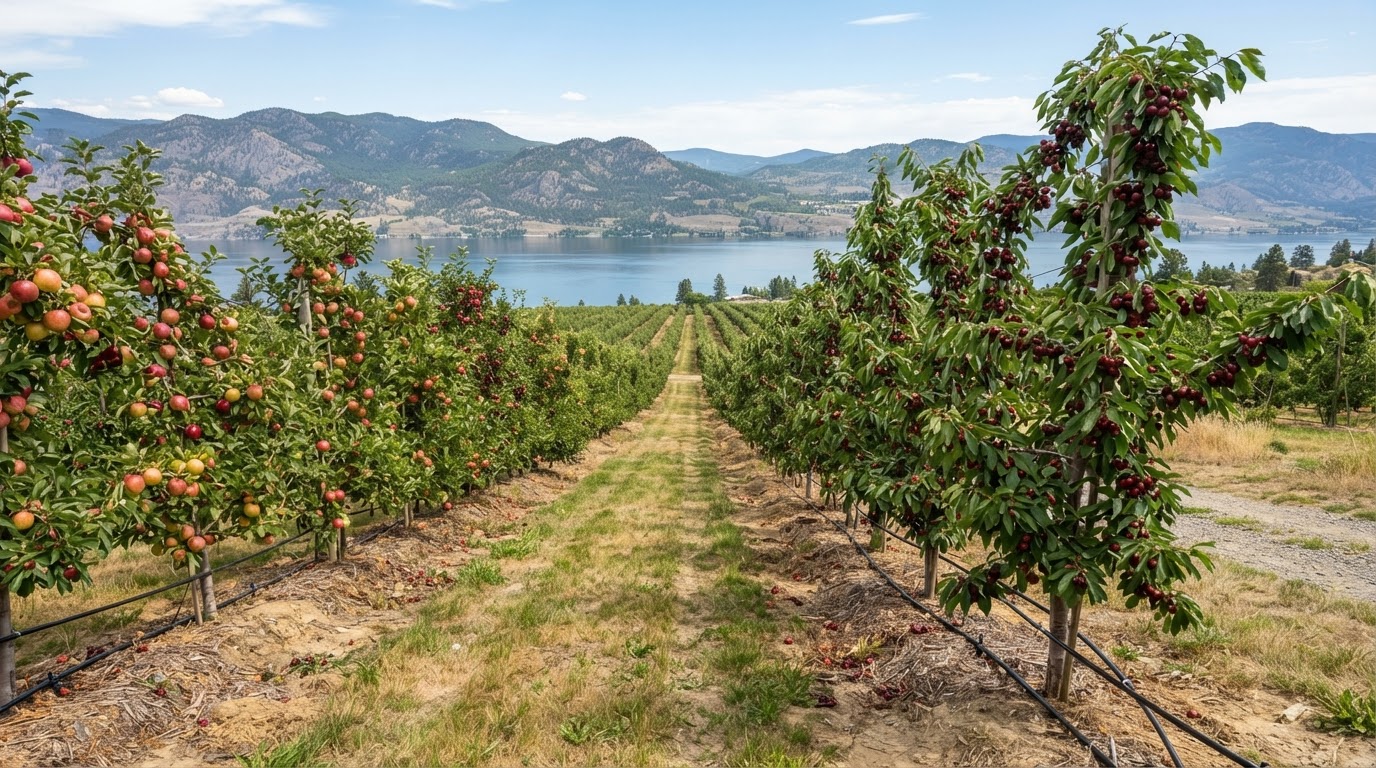
There is a rhythm to British Columbia's farmland market that almost every buyer follows instinctively: wait for spring, tour properties when the fields are green, and make offers as the weather warms. It feels sensible. It is also the single most expensive instinct a farm buyer can have. By the time the daffodils bloom in the Fraser Valley or the buds break in the Okanagan, the best parcels are already under contract and the asking prices have firmed up against a crowded field of competing buyers.
Winter — roughly November through February — is the quiet season, and it is where the smartest farm purchases tend to happen. Inventory is thinner, but the sellers who list in winter are almost always motivated. Competition drops sharply. And critically, winter is when the land is most honest about its weaknesses: saturated soils, seasonal access problems, drainage failures, and exposed water realities that a lush spring meadow will happily hide. This guide explains why the off-season is the buyer's market, what you can and cannot verify in winter, and how to structure an offer that protects you through to spring.
The core takeaway
Winter farmland buying rewards the prepared and punishes the impulsive. You will see fewer listings, but the ones you see are more likely to be priced to sell. Use the season to verify the things spring hides — drainage, access, and water — and structure subjects that let you complete soil, well, and water testing once the ground thaws. Pair this with our complete due-diligence checklist and farm buying guide.
Educational information, not legal or financial advice
This article reviews seasonal market dynamics and due-diligence considerations for BC farmland purchases. It is provided for educational purposes only. Market conditions, financing requirements, and regulatory rules vary by property and region. Consult a qualified real estate professional, lender, and legal advisor before making an offer.
Why Winter Is the Buyer's Market for BC Farmland
The seasonal pattern in BC agricultural real estate is remarkably consistent. Listings peak in spring and early summer, buyer activity peaks alongside them, and prices reflect that demand. Then, as autumn turns to winter, two things happen: the volume of new listings falls, and the pool of active, financed, and ready buyers shrinks even faster. Families are focused on the holidays, lenders process year-end files, and most would-be purchasers put their search on hold until the new year.
That imbalance — fewer listings, but even fewer buyers — is the textbook definition of a buyer's market. Sellers who list in winter are rarely doing so for the optimal timing. They are often motivated by a deadline: a relocation, an estate settlement, a partnership dissolution, a maturing mortgage, or a farm operation that needs to transition before the next production cycle. A motivated seller with thin winter competition is a buyer's strongest negotiating position of the entire year.
The sellers you meet in winter
- Estate and succession sellers finalizing a transition before year-end or the next tax cycle.
- Owners relocating for work or family who cannot wait for a spring listing window.
- Producers winding down an operation — retiring dairy, poultry, or berry growers — who want a clean handover before the next season.
- Listings that did not sell in the summer/fall peak and have now accumulated days on market, often with price reductions.
- Banks, executors, or court-supervised sales where timing is driven by process, not market optimism.
What Winter Reveals That Spring Hides
The most valuable thing about viewing farmland in winter is not the price — it is the information. A property that looks idyllic in May can be a drainage nightmare in November. The same parcel that photographs beautifully under a summer sun can reveal a seasonal creek that floods the lower field, a road that becomes impassable after the first frost, or a well that runs low when the aquifer is stressed. Winter shows you the land's worst case, and if the worst case is acceptable, you can buy with far more confidence.
Drainage and soil saturation
BC's wettest regions — the Fraser Valley, Vancouver Island, and parts of the Kootenays — receive the bulk of their precipitation between October and March. A winter walk across a Fraser Valley parcel will tell you immediately where water pools, where the soil stays saturated, and whether the lower fields drain at all. Standing water, saturated pastures, and visible runoff channels are all signs that a parcel's productive acreage may be smaller than its legal acreage. In spring, the same ground will be green and dry enough to walk, and the problem will be invisible.
Year-round access
Many rural and Interior parcels are accessed by unpaved roads, private driveways, or easements over neighbouring land. In summer, a gravel lane is a minor inconvenience. In winter, that same lane can become a serious, recurring cost — plowing, grading, and in some cases, weeks where a vehicle cannot get through at all. If you view a property in January, you will see exactly what winter access looks like, including whether the road is maintained, whether the slope is passable in snow, and whether the neighbours' easement is plowed. This is information you simply cannot get from a June visit.
Water realities
Winter is the low-demand season for irrigation, but it is the high-stress season for some aquifers and surface sources. Coastal and Gulf Island wells that hold up in spring can show stress by late winter. Ditch systems and creek licences that look generous in May may be restricted or dry by February. While you cannot run a full pump test on a frozen system, you can ask for winter water-level records, review the licence's seasonal conditions, and identify whether the property's water story has a weak season. See our guide to verifying water rights and our article on buying farmland with a well.
What You Cannot Verify in Winter (and How to Handle It)
Winter buying has one genuine limitation: the ground is frozen or saturated, which restricts some physical due diligence. You typically cannot run a meaningful well pump test, take a soil percolation test, or fully assess a septic field while the ground is frozen. The solution is not to wait for spring — it is to write these verifications into your offer as subjects, with conditions that allow testing once the ground thaws. A well-structured winter offer with spring testing subjects gives you the winter price advantage without the winter verification risk.
- 1Include a subject to well pump test and water-quality analysis, to be completed once the ground thaws and the system can be properly tested.
- 2Include a subject to satisfactory soil and percolation testing where you plan to build, install drainage, or expand production.
- 3Include a subject to satisfactory septic inspection if the property is on a private system.
- 4Request historical water-level and yield records from the seller for the low-season months.
- 5Confirm with the local municipality or regional district whether any seasonal road restrictions (weight limits, spring breakup closures) affect the property.
Financing and Timing Advantages of a Winter Purchase
There are practical timing advantages to closing a farm purchase in winter or early spring that go beyond price. Lenders and agricultural specialists — including Farm Credit Canada and bank agribusiness divisions — are generally less backlogged in winter than during the spring buying rush, which can mean faster underwriting and more attentive file handling. An offer accepted in January can often close by early spring, giving you the full growing season to prepare the land, plant, or begin a development plan rather than losing half a season to a transaction that closes in mid-summer.
For buyers planning a new planting — blueberries, hazelnuts, vines, or orchard stock — a winter or early-spring close aligns with the planting window. Bare-root nursery stock is ordered and planted in early spring, and a purchase that closes in time to order and plant can save an entire production year compared to a deal that closes in June. Read our guide to financing BC farmland and use our farmland affordability calculator to model carrying costs before you make an offer.
The Class 9 and ALR Angle in a Winter Purchase
A winter purchase intersects directly with BC Assessment's farm classification cycle. The legislated deadline to apply for Class 9 farm classification is October 31 of each year, for the following tax year. If you close a purchase after that deadline, you will not be able to file a new farm application until the next October 31 — meaning the property may sit in a higher tax class for a full cycle unless the seller's existing classification carries through. This is not a reason to avoid a winter purchase, but it is a reason to understand the timing and, where possible, structure the deal so that either the seller's classification is preserved or you have a clear plan for the next filing window. See our BC farm classification guide and our article on the Class 9 threshold debate.
Similarly, ALR status is a year-round consideration that does not change with the seasons, but winter is a good time to confirm it on the Agricultural Land Commission portal and to review any non-farm-use applications or pending decisions, since these can take months and a winter purchase gives you runway before the next production cycle. Review our ALR land-use guide for the framework.
A Practical Winter Buying Checklist
- 1Walk the property after heavy rain or snowmelt to observe drainage, pooling, and runoff patterns that spring will hide.
- 2Drive the access road in winter conditions to confirm it is passable and understand maintenance responsibility.
- 3Ask for winter water-level records and review the water licence's seasonal conditions.
- 4Review days-on-market and price history — winter listings often carry reductions from the prior peak season.
- 5Structure subjects to allow well, soil, and septic testing once the ground thaws.
- 6Confirm the BC Assessment classification and the October 31 farm-application timing relative to your closing date.
- 7Verify ALR status and any pending non-farm-use applications on the ALC portal.
- 8Speak to a lender who understands agricultural property early — winter is a good window for attentive underwriting.
- 9Model carrying costs, including the possibility of a full cycle at a higher tax class before farm classification is restored.
Summary: The Off-Season Edge
Buying BC farmland in winter is not about finding more listings — it is about finding better deals and better information. The sellers who list in the off-season are motivated, the competition is thin, and the land shows you its drainage, access, and water weaknesses in their most honest form. The trade-off — frozen-ground testing limits — is solved with well-written subjects, not by waiting for spring. If you are prepared, financed, and willing to do the verification work, the off-season is where the smartest farm purchases in British Columbia are made.
If you are considering a farmland purchase this winter — in the Fraser Valley, Okanagan, Vancouver Island, or the Interior — contact Gurjit Ghai for off-market opportunities, motivated-seller listings, and a due-diligence framework built for the season. You can also request a confidential farm valuation if you are weighing a sale before year-end.
Important: This information is educational only and is not legal, tax, financial or regulatory advice. ALR rules, water licensing, zoning and farm-classification requirements can change and depend on your specific property and circumstances. Always verify with the relevant BC authorities and qualified professionals before making decisions.
Frequently Asked Questions
- Is winter a good time to buy farmland in BC?
- For prepared buyers, yes. Winter typically brings fewer competing buyers, more motivated sellers, and often lower prices than the spring peak. It is also the best season to observe a property's drainage, access, and water weaknesses in their most honest form. The main limitation is that frozen or saturated ground restricts some physical testing, which is handled by writing well, soil, and septic testing into your offer as subjects to be completed once the ground thaws.
- Why are farmland prices lower in winter?
- Farmland listings and buyer activity both peak in spring and summer. In winter, the volume of active, financed buyers drops faster than the volume of listings, which shifts negotiating power toward buyers. Sellers who list in winter are often motivated by deadlines — relocations, estate settlements, partnership changes, or listings that did not sell during the prior peak season — and are typically more receptive to offers.
- What can I not verify when buying a farm in winter?
- Frozen or saturated ground generally prevents a meaningful well pump test, soil percolation test, and full septic inspection during winter. The standard solution is to include these as subjects in your offer, with conditions allowing the testing to be completed once the ground thaws. This preserves the winter price advantage while protecting you against verification risk.
- How does a winter purchase affect BC farm classification (Class 9)?
- The legislated deadline to apply for Class 9 farm classification with BC Assessment is October 31 each year, for the following tax year. If you close after that date, you generally cannot file a new application until the next October 31, which means the property may sit in a higher tax class for a cycle unless the seller's existing classification carries through. This is manageable with planning — confirm the property's current classification and the filing timing relative to your closing date before you make an offer.
- Does winter access matter for rural BC farmland?
- Yes. Many rural and Interior parcels are accessed by unpaved roads, private driveways, or easements that are manageable in summer but can become costly or impassable in winter. Viewing a property in winter conditions shows you exactly what snow and ice access looks like, whether the road is maintained, and whether the slope and surface are passable — information a summer visit cannot provide.
- Can I close a winter purchase in time for spring planting?
- Often, yes. An offer accepted in January can frequently close by early spring, which aligns with the bare-root planting window for blueberries, vines, orchard stock, and other perennials. This can save an entire production year compared to a deal that closes in mid-summer. Lenders and agricultural specialists are also generally less backlogged in winter, which can speed underwriting.
Gurjit Ghai, REALTOR®
Personal Real Estate Corporation
Brokerage: Rexara Realty Inc.
Gurjit Ghai is a BC real estate professional specializing in agricultural land, ALR properties, and farm operations across British Columbia. He helps buyers and sellers navigate water rights, soil capability, farm classification, and the unique due diligence that farmland transactions require.