

Written by Gurjit Ghai, REALTOR®
Rexara Realty Inc.·Published: October 30, 2026·Farm Taxes
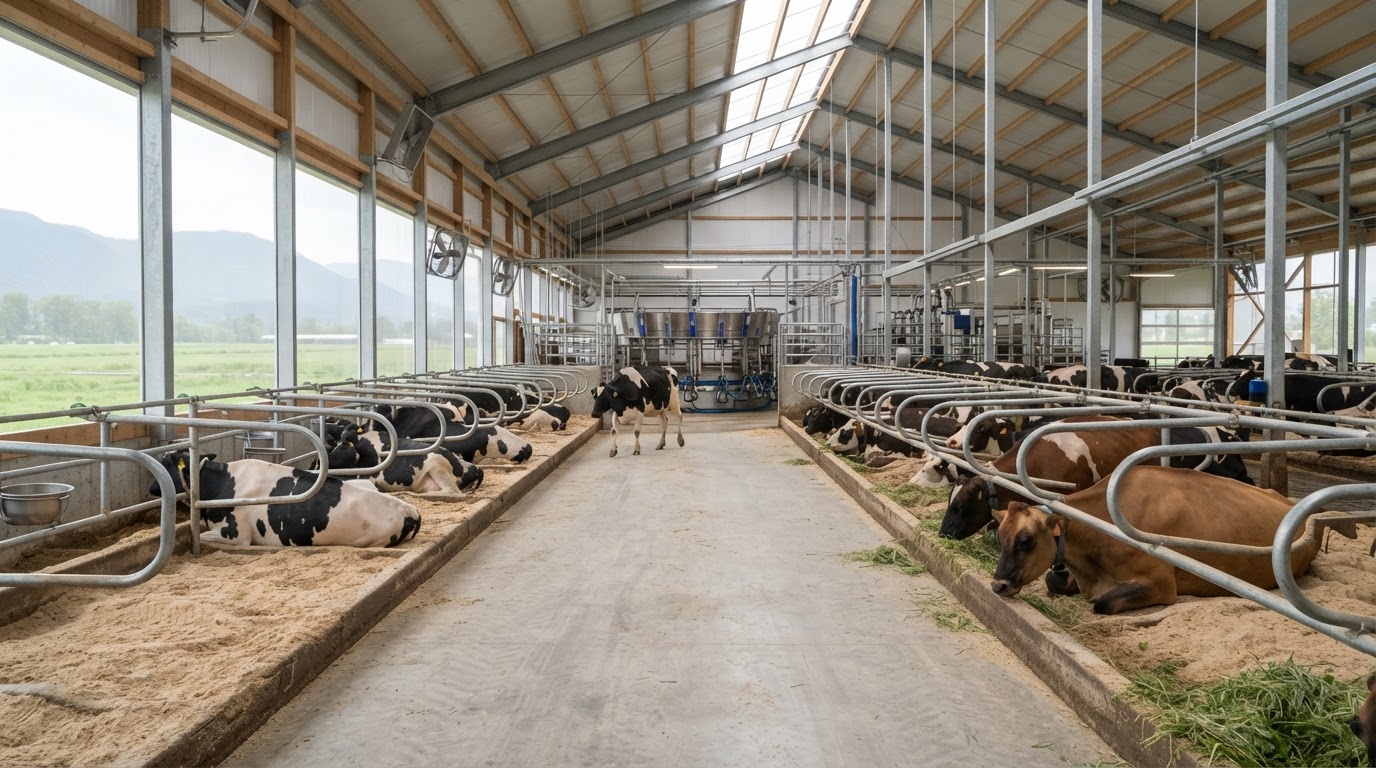
In British Columbia, property tax is often one of the single largest annual line items in rural land ownership. A 10-acre parcel assessed at market residential value in the Fraser Valley, Central Okanagan, or Vancouver Island can easily generate five-figure annual municipal and school tax bills. Yet if that exact same parcel secures Class 9 farm status from BC Assessment, its agricultural land value drops to a fraction of open-market value, saving the owner thousands of dollars each year.
For more than three decades, the entry gate to that preferential tax treatment has stayed largely unchanged: producing as little as $2,500 in annual gross farm revenue for parcels between 1.98 and 10 acres. Today, that three-decade-old threshold is under intense scrutiny. Commercial agricultural organizations, including the BC Agriculture Council (BCAC), have called for a comprehensive review of the farm classification framework, while hobby farm owners, direct-market micro-growers, and prospective buyers are watching closely.
This guide breaks down the statutory rules under Section 23 of the Assessment Act and B.C. Reg. 411/95, examines why the $2,500 benchmark has become so contentious, explores the competing arguments, and outlines the critical October 31 deadlines every buyer and seller must understand. For baseline tax guidance, pair this with our BC farm classification guide and test carrying costs on our farmland affordability calculator.
The core takeaway for buyers and sellers
Class 9 farm classification is not a land covenant or an ALR entitlement; it is a voluntary annual tax status administered exclusively by BC Assessment. It never transfers automatically to an idle property upon sale. If you acquire a farm, you must file a General Application for Farm Classification by October 31 of the year prior to the taxation year and prove qualifying agricultural production. Relying on an existing owner's tax bill without verifying your own operational plan is one of the costliest mistakes a buyer can make.
Educational information, not legal or tax advice
This article reviews public legislation (Assessment Act and B.C. Reg. 411/95) and publicly reported policy positions from agricultural industry groups. It is provided for educational and due-diligence purposes only. Tax rates, classification criteria, and assessment valuations are determined solely by BC Assessment and local taxing authorities. Consult an agrologist, accountant, or legal professional before making financial commitments.
How BC Assessment Class 9 Farm Status Actually Works
Under Section 23 of the British Columbia Assessment Act and the Classification of Land as a Farm Regulation (B.C. Reg. 411/95), land actively utilized for qualifying agricultural production can be assigned Property Class 9. The tangible benefit is profound: land designated as Class 9 is assessed using regulated agricultural productivity rates rather than current market values. While the farmer's primary residence is assessed as Class 1 residential, the productive acreage itself receives substantial tax relief.
To qualify as a producing farm, the property must be actively used for a qualifying agricultural activity—such as field crops, livestock rearing, horticulture, apiaries, berry production, vineyards, or horse rearing operated in conjunction with breeding and training. Idle land, hobby gardens without commercial sales, and speculative holdings do not qualify.
The Current Gross Revenue Thresholds by Parcel Size
The gross income requirement set out in the Farm Class Regulation is tiered based on the total area of the farm operation:
- Between 0.8 hectares (1.98 acres) and 4 hectares (10 acres): The farm operation must generate at least $2,500 in gross annual farm gate sales from qualifying agricultural products.
- Greater than 4 hectares (10 acres): The operation must produce $2,500, plus an additional 5% of the actual land value of the acreage exceeding 4 hectares (or meet alternative production criteria under the regulation).
- Under 0.8 hectares (less than 1.98 acres): The operation must generate at least $10,000 in gross annual farm sales. This higher floor was specifically designed to prevent suburban residential lots from claiming farm status through backyard gardening.
For these calculations, 'farm gate amount' means the actual gross proceeds received by the producer from qualifying sales, supported by written sales slips, farm receipts, invoices, or verified sales logs. In livestock, it reflects live weight sales or value added through weight gain; in purchased nursery stock, it reflects the difference between acquisition and resale price.
Why the $2,500 Floor Is Under Intense Pressure
When the $2,500 income requirement was codified in B.C. Reg. 411/95 during the mid-1990s, an acre of prime agricultural land in Abbotsford, Chilliwack, or Langley traded for roughly $15,000 to $25,000. In that economic era, generating $2,500 from a modest 5-acre hayfield, small apple orchard, or handful of sheep represented a reasonable proportion of the parcel's land value and an honest contribution to local food supply.
Fast forward three decades. Prime Fraser Valley farmland frequently trades above $120,000 to $160,000+ per bare acre. Even in the Okanagan and Vancouver Island, multi-acre ALR parcels regularly command $2 million to $4 million+. In 2026 dollars, $2,500 can be generated by selling a modest harvest of garlic, boarding a couple of calves, or cutting a single seasonal hay crop. Commercial operators argue that inflation, land appreciation, and municipal infrastructure costs have rendered the $2,500 bar virtually meaningless.
The Commercial Agriculture Perspective: Curbing Estate Tax Havens
Full-time farmers and industry advocacy bodies point to several growing problems caused by an outdated threshold:
- Land Access & Artificial Pricing: When wealthy residential buyers can purchase a 10-acre ALR parcel, build an expansive estate home, and shelter millions of dollars in land value from property taxes by making a nominal $2,500 in hay or honey sales, farmland prices become detached from commercial farm economics.
- Municipal Tax Inequities: Rural municipalities rely on property tax revenues to maintain roads, dikes, bridges, and drainage canals. When estate acreages pay agricultural land tax rates instead of residential rates, the tax burden shifts onto other residential homeowners and commercial businesses.
- Loss of Working Production: Commercial dairy, berry, greenhouse, and poultry producers looking to lease surrounding land frequently find themselves outbid by non-farm estate buyers who have no intention of leasing the soil to commercial operators if they can satisfy Class 9 on their own with minimal effort.
The Small-Scale & Emerging Grower Counter-Argument
On the other side of the debate are smallholder farmers, market gardeners, agroecological stewards, and multi-generational rural families who caution against blunt increases to the threshold:
- Entry Point for Beginning Farmers: Young and first-time farmers rarely start with 50-cow dairy herds or 40-acre automated blueberry operations. Most start on leased or small family acreages producing high-value specialty greens, cut flowers, heritage poultry, or apiary products where early revenue is modest.
- Climate & Crop Volatility: Farming carries biological risk. A late spring frost in the Okanagan, an extreme heat dome, or seasonal drought in the Shuswap or Cariboo can cut annual yields by 40% to 60%. If the income floor is raised dramatically, a single bad weather season could cause an honest working farm to lose Class 9 status and face a devastating retroactive tax recalculation.
- Preservation of Open Soil: Small acreage owners argue that keeping parcels in pasture, pollinator meadows, or small-scale orchard production preserves open green space and local food security far better than forcing landowners into commercialized monocultures.
Comparing the Policy Proposals
Industry discussions and stakeholder submissions to the provincial government and BC Assessment have suggested several alternative mechanisms rather than a simple flat increase:
- Indexed Thresholds: Adjusting the $2,500 floor to reflect historical inflation since 1995 (which would place the requirement roughly between $5,000 and $7,500 for a 10-acre parcel).
- Per-Acre Scaled Production: Replacing the flat $2,500 lump sum with an explicit per-acre gross revenue minimum (for example, $500 to $1,000 per acre in production).
- Soil Utilization Ratios: Requiring that a minimum percentage of arable land (e.g., 50% or 75%) be actively cultivated or placed under a verified commercial lease to a registered farm business.
- Enhanced Lease Provisions: Creating streamlined tax benefits for non-farming landowners who lease 100% of their arable soil to commercial agricultural producers on multi-year terms.
Critical Rules for Buyers: Protecting Your Property Tax Status
Regardless of future legislative reforms, buyers evaluating BC farmland today must navigate the existing rules with absolute precision. Here are the practical realities every prospective purchaser should incorporate into their due diligence:
1. Class 9 Does Not Automatically Transfer Upon Sale
A frequent misconception among buyers is assuming that because a property is currently taxed as a farm, that tax treatment carries forward indefinitely. Under Section 23 of the Assessment Act, farm classification requires the owner to maintain qualifying use. When ownership transfers, BC Assessment expects the purchaser to submit a General Application for Farm Classification by October 31 to confirm their agricultural intentions for the upcoming tax year. If you purchase in mid-summer and allow the fields to sit fallow without an application, the assessor can reclassify the land to Class 1 residential on the next assessment notice.
2. The Inflexible October 31 Legislated Deadline
Under B.C. Reg. 411/95, the deadline to apply for farm classification is October 31 of each year, for implementation in the following taxation year. This is a strict statutory deadline. BC Assessment cannot accept late applications. If you take possession of a farm on November 15 without prior arrangements or qualifying lease documentation in place, you may have to wait over 13 months before farm classification can be restored for the subsequent tax cycle.
3. Developing Farms Require a Formal Development Plan
What if you purchase bare land or plant new blueberry bushes, hazelnut trees, or grapevines that take three to five years to produce their first harvest? Under Section 8 of the Farm Class Regulation, you can apply for 'Developing Farm' status. To qualify, you must submit a detailed farm development plan by October 31, including site sketches, planting dates, seedling invoices, anticipated yield timelines, and projected sales figures demonstrating that the parcel will meet the mandatory revenue threshold upon full production.
4. The Farmland Lease Alternative
If you want to buy rural acreage in BC but do not plan to farm the soil yourself, you can preserve Class 9 farm status by leasing the arable land to a third-party farmer. To qualify under BC Assessment rules, there must be a written lease agreement, the leased land must make a reasonable contribution to the lessee's overall farm business, the farmer must meet statutory production and sales requirements across their operation, and a formal Farm Classification Lease Form must be submitted alongside the general application by October 31. Review our full BC farmland lease guide for structuring lease terms.
5. Non-Dwelling Farm Building Tax Exemptions
Beyond land valuation, Class 9 status unlocks statutory property tax exemptions for qualifying farm buildings (barns, riding arenas, poultry barns, packing sheds, storage silos, and greenhouses). In municipal jurisdictions, farm outbuildings are exempt from property and school taxes up to the greater of $50,000 or 87.5% of their total assessed value. In rural taxation areas outside incorporated municipalities, farm outbuildings are 100% exempt from general provincial property tax, with school tax capped at the 87.5% threshold. Note that the farmer's private residence (Class 1) does not qualify for this exemption.
Due Diligence Checklist for Farmland Buyers and Sellers
- 1Inspect the Current BC Assessment Notice: Review lines separating Class 1 (Residential) from Class 9 (Farm Land). Check whether farm outbuilding exemptions are currently being applied.
- 2Request Three Years of Farm Gate Receipts: Ask the seller for written proof of sales, invoices, and BC Assessment Farm Income Request forms to confirm that the parcel meets its statutory threshold.
- 3Verify the Land Status in the ALR: Confirm whether the parcel is inside the provincial Agricultural Land Reserve. While ALR designation protects the land for farming, it does not automatically confer Class 9 tax status.
- 4Confirm Water Rights and Irrigation Licences: High-value agricultural production requires secure water. Confirm surface water licences and registered well capacity under the Water Sustainability Act. See our guide to verifying water rights.
- 5Calendar the October 31 Filing Deadline: Ensure your purchase contract accounts for filing the General Application for Farm Classification or Farm Lease Form prior to the provincial deadline.
- 6Model Tax Scenarios: If you are converting a commercial farm into a lifestyle acreage, use our farmland affordability calculator to calculate the financial impact if the land is reassessed at Class 1 residential rates.
Summary: Navigating the Future of BC Farmland Taxes
The debate over British Columbia's $2,500 farm classification threshold highlights the tension between preserving commercial food production and supporting small-scale rural ownership. While policy reviews and legislative discussions continue in Victoria, the statutory framework of Section 23 of the Assessment Act and B.C. Reg. 411/95 remains the active law today.
Whether you are purchasing a hobby farm in Mission, an equestrian estate in Langley, a commercial berry acreage in Abbotsford, or an orchard in Kelowna, understanding the precise mechanics of Class 9 farm status is essential to protecting your long-term investment. If you have questions about the tax classification, ALR boundaries, or lease agreements on a specific BC property, contact Gurjit Ghai for experienced, transaction-focused agricultural real estate guidance.
Important: This information is educational only and is not legal, tax, financial or regulatory advice. ALR rules, water licensing, zoning and farm-classification requirements can change and depend on your specific property and circumstances. Always verify with the relevant BC authorities and qualified professionals before making decisions.
Frequently Asked Questions
- What is BC Assessment Class 9 farm classification?
- Class 9 is a dedicated property class established under Section 23 of the BC Assessment Act and B.C. Reg. 411/95 for land actively used for qualifying agricultural production. When land is designated as Class 9, BC Assessment values the productive acreage based on regulated agricultural productivity rates rather than open-market residential or commercial real estate values, resulting in substantially lower municipal and school property taxes.
- What are the minimum gross income requirements for farm status in BC?
- Under the Classification of Land as a Farm Regulation, the annual gross farm gate income requirements are: (1) $2,500 for farm operations between 0.8 hectares (1.98 acres) and 4 hectares (10 acres); (2) $2,500 plus 5% of the actual value of land in excess of 4 hectares for operations over 10 acres; and (3) $10,000 for operations under 0.8 hectares (less than 1.98 acres). All figures reflect gross revenue from the sale of qualifying agricultural commodities.
- Does farm classification automatically transfer when I buy a BC farm?
- No. Farm classification is tied to active agricultural use by the current owner or a verified tenant farmer. When a property changes hands, BC Assessment expects the purchaser to file a General Application for Farm Classification by October 31 to demonstrate that qualifying farming activities will continue. If no application is made and farming ceases, the assessor will reclassify the property to Class 1 residential, leading to significantly higher property taxes.
- What is the deadline to apply for farm classification in British Columbia?
- The legislated deadline is October 31 of each year, for consideration for the subsequent tax year. This deadline is set by provincial regulation and cannot be extended. Late applications are not accepted by BC Assessment, and landowners who miss the date must wait until the following October 31 to apply.
- Why is the $2,500 farm classification threshold being debated?
- The $2,500 threshold was set in the mid-1990s and has not been updated for over 30 years, during which BC farmland prices have appreciated by several hundred percent. Commercial farm groups, including the BC Agriculture Council, argue that the low floor allows wealthy non-farm buyers to purchase multi-million-dollar ALR parcels as residential estates and claim agricultural tax subsidies with nominal farming activity. Conversely, smallholders and beginning farmers argue that raising the threshold too steeply could penalize micro-growers, emerging farms, and multi-generational families experiencing bad weather or crop losses.
- Can I get farm classification if I lease my land to another farmer?
- Yes. Land leased to an active farmer can qualify for Class 9 farm status if the owner submits an application, a formal written lease is executed, the leased parcel makes a valid contribution to the farmer's overall operation, and the lessee meets statutory farm income and production standards. A Farm Classification Lease Form must be submitted to BC Assessment by October 31.
- Does having land in the Agricultural Land Reserve (ALR) automatically give me farm tax status?
- No. ALR designation and Class 9 farm status are separate legal frameworks administered by different provincial bodies. The ALR is a land-use zoning reserve administered by the Agricultural Land Commission (ALC) to restrict subdivision and non-farm uses. Class 9 farm classification is an annual tax status administered by BC Assessment based on actual agricultural production and gross sales. Land can be in the ALR without having farm tax status, and land outside the ALR can receive farm status if actively farmed.
- What tax exemptions apply to farm buildings in British Columbia?
- Under BC provincial taxation rules, qualifying non-dwelling farm outbuildings (such as barns, greenhouses, silos, and riding arenas) in municipalities receive an exemption from general property and school taxes equal to the greater of $50,000 or 87.5% of their total assessed value. In rural taxation areas outside municipalities, qualifying farm buildings are 100% exempt from general provincial property tax, with school tax exemptions capped at the 87.5% mark. The farmer's residence remains classified as Class 1 residential and does not qualify for this exemption.
Gurjit Ghai, REALTOR®
Personal Real Estate Corporation
Brokerage: Rexara Realty Inc.
Gurjit Ghai is a BC real estate professional specializing in agricultural land, ALR properties, and farm operations across British Columbia. He helps buyers and sellers navigate water rights, soil capability, farm classification, and the unique due diligence that farmland transactions require.