

Written by Gurjit Ghai, REALTOR®
Rexara Realty Inc.·Published: October 20, 2026·Selling
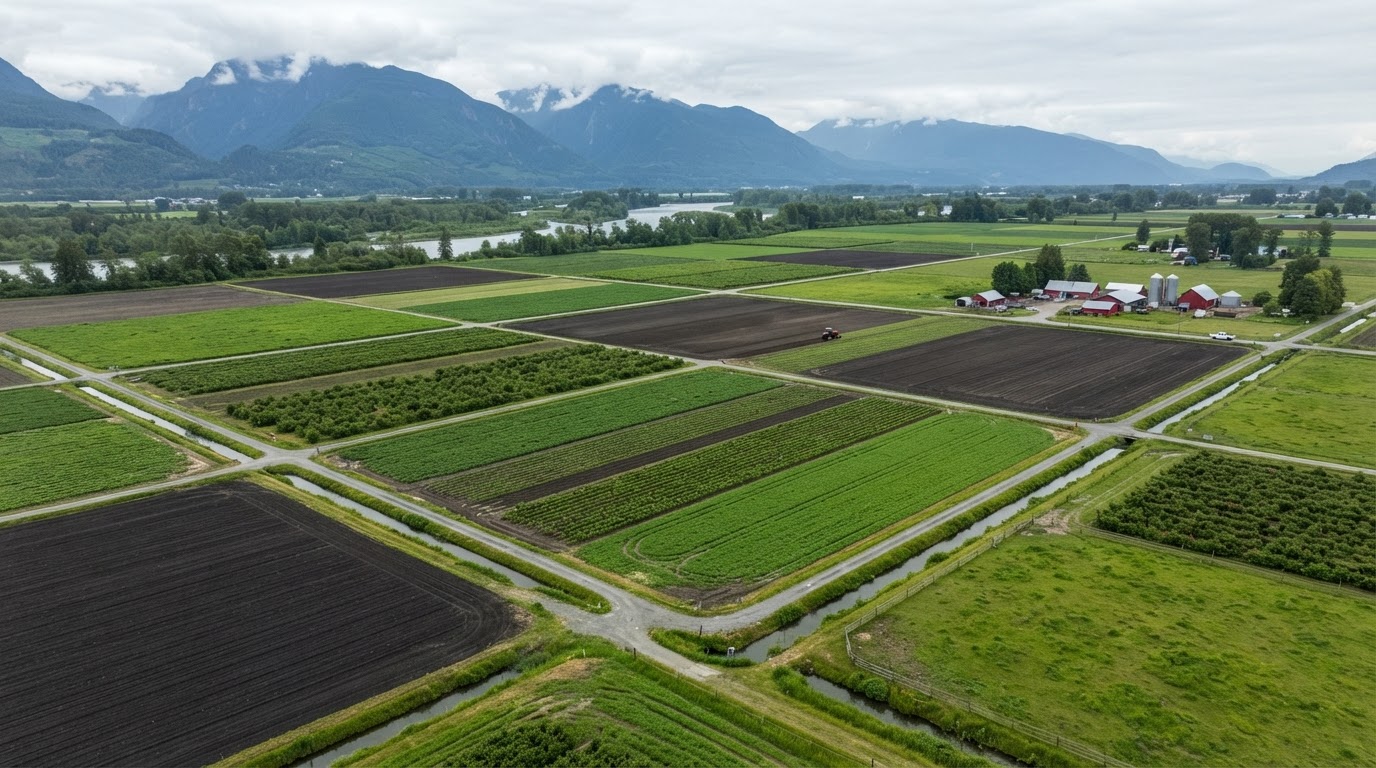
Farm succession is the single biggest unaddressed risk in BC agriculture. The average BC farmer is nearing retirement age, and most family farms do not have a written succession plan. When a farm transfers without one, the result is too often a forced sale, a tax bill the family did not expect, or a dispute over who actually gets the land — and because so much BC farmland is in the ALR, the land-use rules layer on top of the family and tax issues. This guide explains how BC farm succession actually works, what the common traps are, and how to plan a transfer so the farm and the family both come through it.
Succession sits at the intersection of several things this site covers separately: selling a farm, buying a farm, financing ALR farmland, ALR land-use rules, farm valuation, and farm classification. Succession is where all of them meet at once — which is why it needs its own plan and its own timeline.
The short answer
A BC farm succession is a multi-year process, not a single transaction. It usually involves a transition in ownership (often staged), a transfer or sale of farm assets (land, improvements, quota, water licences), a capital gains and tax analysis, and a family agreement on who farms what and who owns what. ALR status, supply-managed quota, and water licences each carry their own transfer rules that can derail a plan if they are not checked early. Start the plan years before you intend to retire — not when you are already ready to step back.
What farm succession actually means in BC
Succession is the transfer of the operating farm business and the underlying farmland from one generation to the next — within a family, or to a non-family successor in cases where there is no family member to take over. In BC, that transfer usually involves three separate things that are often confused: the real estate (the land and buildings), the farm business (the operating entity, equipment, and contracts), and the intangible assets (supply-managed quota, water licences, and farm-class tax status). Each transfers differently, and a plan that moves only the land while ignoring the business and the intangibles is the most common reason a succession fails.
A succession can be a lifetime transfer (a sale or gift while the current owner is alive), a transfer on death through an estate plan, or — most commonly and most safely — a staged transition where the next generation takes over management and then ownership over several years. The staged approach lets the retiring generation test the successor's commitment and capacity, lets the successor build the farming track record a lender will want to see, and spreads the tax and financial transition across more than one tax year.
The five parts of a BC farm succession plan
- 1Who farms and who owns: a family agreement on which successor takes over the operating role and which family members receive ownership, and whether those are the same person or different people.
- 2The land and ALR: confirm the parcel's ALR status, what non-farm use is permitted, and whether any subdivision or boundary adjustment is needed for the succession — ALR rules apply regardless of who owns the land (see our ALR guide).
- 3The farm business and assets: transfer the operating entity, equipment, contracts, and inventory — separately from the land if the structure requires it.
- 4The intangible assets: supply-managed quota (dairy, poultry, eggs), water licences, and any processing or marketing licences — each has its own transfer or consent process (see our quota guide and water licence transfer guide).
- 5The tax and financial plan: a capital gains analysis, a plan for any principal-residence or farm-class tax treatment, and a financing plan for the successor if the transfer is a sale rather than a gift (see our financing guide).
ALR land and succession: the land-use layer
Because so much BC farmland is in the Agricultural Land Reserve, the ALR rules apply to the land no matter who owns it — and that shapes what a succession can and cannot do. A transfer of ALR land within a family does not by itself trigger a non-farm-use review, but any plan to subdivide the parcel, adjust a boundary, or put part of the land into non-farm use does require Agricultural Land Commission approval, and that approval is not guaranteed. A common succession goal — splitting off a homesite for the retiring generation while the successor keeps the farmland — is exactly the kind of thing the ALC scrutinises, and it can be approved, approved with conditions, or refused depending on the parcel and the impact on farmland.
The key is to check the ALR layer early. Confirm the parcel's status, confirm whether the proposed transfer structure needs any ALC approval, and build the timeline around that approval — not the other way around. A succession plan that assumes a subdivision the ALC will not permit is a plan that will fail at the moment it matters most. See our ALR exclusion guide for how the ALC process works.
Supply-managed quota: the asset that does not transfer with the deed
For dairy, poultry, and egg operations, supply-managed quota is often the most valuable asset on the farm — and it does not transfer automatically with the real estate. Quota is administered under the provincial supply management system, and a transfer to a new operator typically requires the successor to be a recognised producer and to meet the program's eligibility and transfer rules. A succession that moves the land and buildings but leaves the quota unresolved can leave the successor with a farm they cannot operate at the same scale — and leave the retiring generation's most valuable asset in limbo.
Plan the quota transfer as its own workstream. Confirm the successor's eligibility, understand the transfer process under the relevant supply board, and time it with the real estate and business transfer. See our supply-managed quota guide for how quota works in a purchase — the same rules apply in a family succession.
Water licences and succession
A BC water licence is an appurtenant right attached to the land, but a transfer of the land does not always mean a clean transfer of the licence in practice. The successor should confirm the licence is in good standing, that the authorised use matches the planned farming operation, and that any change of use or change of purpose is applied for under the Water Sustainability Act. A vineyard's irrigation allocation, a ranch's stock-water licence, or a berry operation's irrigation rights can be the difference between a viable farm and an unviable one — and a succession that does not verify the water layer can hand the successor a farm that cannot legally use the water it appears to have. See our water rights guide and water licence transfer guide.
Capital gains, farm class, and the tax layer
A farm succession that is structured as a sale (even a sale within the family) can trigger a capital gain on the land, the buildings, and the quota — and the tax treatment of each is different. Land that has appreciated significantly can generate a large gain; the principal residence exemption may shelter part of a homesite but not farmland; and farm-class property tax treatment (see our farm classification guide) affects the ongoing tax bill but not necessarily the capital gain on sale. A succession structured as a gift avoids a capital gain at the time of transfer but can carry other consequences, and a transfer at death triggers its own estate-administration rules.
This is not tax or legal advice
Capital gains, principal-residence treatment, farm-class tax rules, and estate administration all depend on the specific facts of the transfer, the ownership structure, and the year. This guide explains the concepts so you know what to ask a professional — it is not a substitute for a BC tax advisor, a lawyer, and an accountant who work on farm succession. Engage qualified professionals before structuring any transfer.
The practical takeaway is that the tax plan is not an afterthought — it is one of the five parts of the succession, and it interacts with the others. A staged transfer across more than one tax year can spread a capital gain; a sale to a successor with financing can be structured to manage the retiring generation's tax exposure; and a gift or transfer-at-death structure has different consequences again. The right structure depends on the farm, the family, and the numbers — which is why a farm valuation is part of the succession plan, not a separate exercise.
Staged succession: why a multi-year transition usually wins
A single-moment transfer — signing the land over on a fixed date — is the simplest to describe and the riskiest to execute. It gives the retiring generation no way to test the successor's readiness, gives the successor no time to build the track record a lender needs, and concentrates any tax exposure into a single year. A staged transition does the opposite: the successor takes over management first, builds operating history and a relationship with the farm's lender and suppliers, and the ownership transfer follows over a defined period. This is the structure most farm succession professionals recommend for a working farm, because it lets each step be tested before the next one happens.
A staged plan also lets the family adjust if circumstances change — a successor who is not ready, a tax rule that shifts, or an ALR application that takes longer than expected. The plan should be written, reviewed by the family and the professionals, and updated as the transition progresses. An unwritten succession plan is one of the most common reasons a family farm ends up sold to a third party instead of transferred within the family.
Succession when there is no family successor
Not every farm has a family member willing or able to take over. In that case, succession means a sale to a non-family buyer — and that is where the selling a farm guides on this site apply directly. The same documentation that makes a farm saleable — verified water, clear ALR status, documented quota, a real farm valuation, and clean improvements — also makes a farm transferable, whether to a family successor or to a new owner. The worst outcome is a farm with no plan and no documentation, sold under time pressure by an estate that does not know the land. The best outcome is a planned sale or transfer with the documentation ready, on a timeline the family controls.
For a buyer, a farm being sold as part of a retirement or succession is often a well-documented one — the retiring operator knows the water, the soil, the improvements, and the history, and that knowledge transfers in the sale. If you are buying, see our buying a farm guide and the due diligence checklist, and ask the seller about the succession timeline and whether the quota, water, and equipment are included.
A practical succession checklist
- 1Write down who will farm the land and who will own it — and whether those are the same person or different people.
- 2Confirm the parcel's ALR status and whether the planned transfer structure (including any subdivision or homesite split) needs ALC approval.
- 3Identify every asset that transfers separately from the land: the farm business entity, equipment, supply-managed quota, water licences, and any processing or marketing licences.
- 4Confirm the successor's eligibility for any quota transfer under the relevant supply board, and start that process early — it has its own timeline.
- 5Verify every water licence is in good standing and that the authorised use matches the successor's planned operation; apply for any change of use under the Water Sustainability Act.
- 6Get a real farm valuation so the family and the professionals are working from the same number — not the BC Assessment value (see our assessment vs market value guide).
- 7Engage a BC tax advisor, a lawyer, and an accountant who work on farm succession, and structure the transfer to manage capital gains and farm-class tax treatment.
- 8If the transfer is a sale to the successor, line up the financing early — see our financing guide for FCC, bank, and vendor take-back options.
- 9Write the plan down, have the family and the professionals review it, and review it annually as the transition progresses.
- 10Start years before you intend to retire — not when you are already ready to step back.
The bottom line
A BC farm succession is a multi-year process that touches land-use rules, supply-managed quota, water licences, tax, and family dynamics at the same time. The farms that transfer successfully are the ones with a written plan, started early, that treats the land, the business, the intangible assets, and the tax as four separate workstreams that each need their own attention. The farms that fail to transfer are usually the ones with no plan — where the ALR status was never checked, the quota was never transferred, the water licence was never verified, and the tax was never modelled until it was too late.
If you are planning a succession — whether you are the retiring generation, the successor, or a family navigating the transfer together — contact Gurjit for help that starts with the land, the water, the quota, and the ALR status, not just the deed.
Important: This information is educational only and is not legal, tax, financial or regulatory advice. ALR rules, water licensing, zoning and farm-classification requirements can change and depend on your specific property and circumstances. Always verify with the relevant BC authorities and qualified professionals before making decisions.
Frequently Asked Questions
- What is farm succession planning in BC?
- Farm succession planning is the multi-year process of transferring a BC farm's ownership and operation from one generation to the next — within a family or to a non-family successor. It covers the real estate (land and buildings), the farm business (the operating entity, equipment, and contracts), and the intangible assets (supply-managed quota, water licences, and farm-class tax status), each of which transfers under its own rules. A good plan is written, started years before retirement, and reviewed by a BC tax advisor, a lawyer, and an accountant.
- Does transferring ALR farmland to a family member require Agricultural Land Commission approval?
- A straightforward transfer of ALR land within a family does not by itself trigger a non-farm-use review, but any plan to subdivide the parcel, adjust a boundary, or put part of the land into non-farm use does require Agricultural Land Commission approval — and that approval is not guaranteed. A common succession goal like splitting off a homesite for the retiring generation is exactly the kind of proposal the ALC scrutinises. Check the ALR status and any approval needs early, and build the timeline around the ALC process, not the other way around.
- Does dairy or poultry quota transfer with the farm in a succession?
- Not automatically. Supply-managed quota (dairy, poultry, eggs) is administered under the provincial supply management system and is a separate asset from the real estate. A transfer to a new operator typically requires the successor to be a recognised producer and to meet the program's eligibility and transfer rules. Plan the quota transfer as its own workstream, confirm the successor's eligibility, and start the process early — it has its own timeline separate from the land transfer.
- Do water licences transfer with the farmland in a succession?
- A BC water licence is an appurtenant right attached to the land, but a transfer of the land does not always mean a clean transfer of the licence in practice. The successor should confirm the licence is in good standing, that the authorised use matches the planned farming operation, and apply for any change of use or change of purpose under the Water Sustainability Act. A vineyard's irrigation allocation or a ranch's stock-water licence can be the difference between a viable and an unviable farm, so verify the water layer as part of the succession plan.
- Is there capital gains tax when transferring a farm to family in BC?
- A farm succession structured as a sale (even within the family) can trigger a capital gain on the land, buildings, and quota, and the tax treatment of each is different. Land that has appreciated can generate a large gain; the principal-residence exemption may shelter part of a homesite but not farmland; and farm-class property tax treatment affects the ongoing bill but not necessarily the capital gain on sale. A gift avoids a capital gain at transfer but can carry other consequences, and a transfer at death triggers its own estate-administration rules. The right structure depends on the specific facts — engage a BC tax advisor and lawyer before structuring any transfer. This guide is not tax or legal advice.
- When should I start planning a BC farm succession?
- Years before you intend to retire — not when you are already ready to step back. A staged transition (the successor takes over management first, then ownership over several years) lets the retiring generation test readiness, lets the successor build the track record a lender needs, and spreads any tax exposure across more than one year. It also gives time to resolve ALR approvals, quota transfers, and water-licence verification, each of which has its own timeline. An unwritten, last-minute plan is the most common reason a family farm ends up sold to a third party instead of transferred within the family.
- What happens to a BC farm with no succession plan?
- A farm with no written succession plan is at risk of a forced sale, an unexpected tax bill, or a family dispute over who gets the land — often under time pressure and with no documentation ready. The land-use rules (ALR status), the quota, the water licences, and the tax treatment each need their own attention, and an estate that does not know the land cannot resolve them quickly. The same documentation that makes a farm saleable — verified water, clear ALR status, documented quota, a real valuation — also makes it transferable, whether to a family successor or a new owner.
Gurjit Ghai, REALTOR®
Personal Real Estate Corporation
Brokerage: Rexara Realty Inc.
Gurjit Ghai is a BC real estate professional specializing in agricultural land, ALR properties, and farm operations across British Columbia. He helps buyers and sellers navigate water rights, soil capability, farm classification, and the unique due diligence that farmland transactions require.