

Written by Gurjit Ghai, REALTOR®
Rexara Realty Inc.·Published: October 17, 2026·Valuation
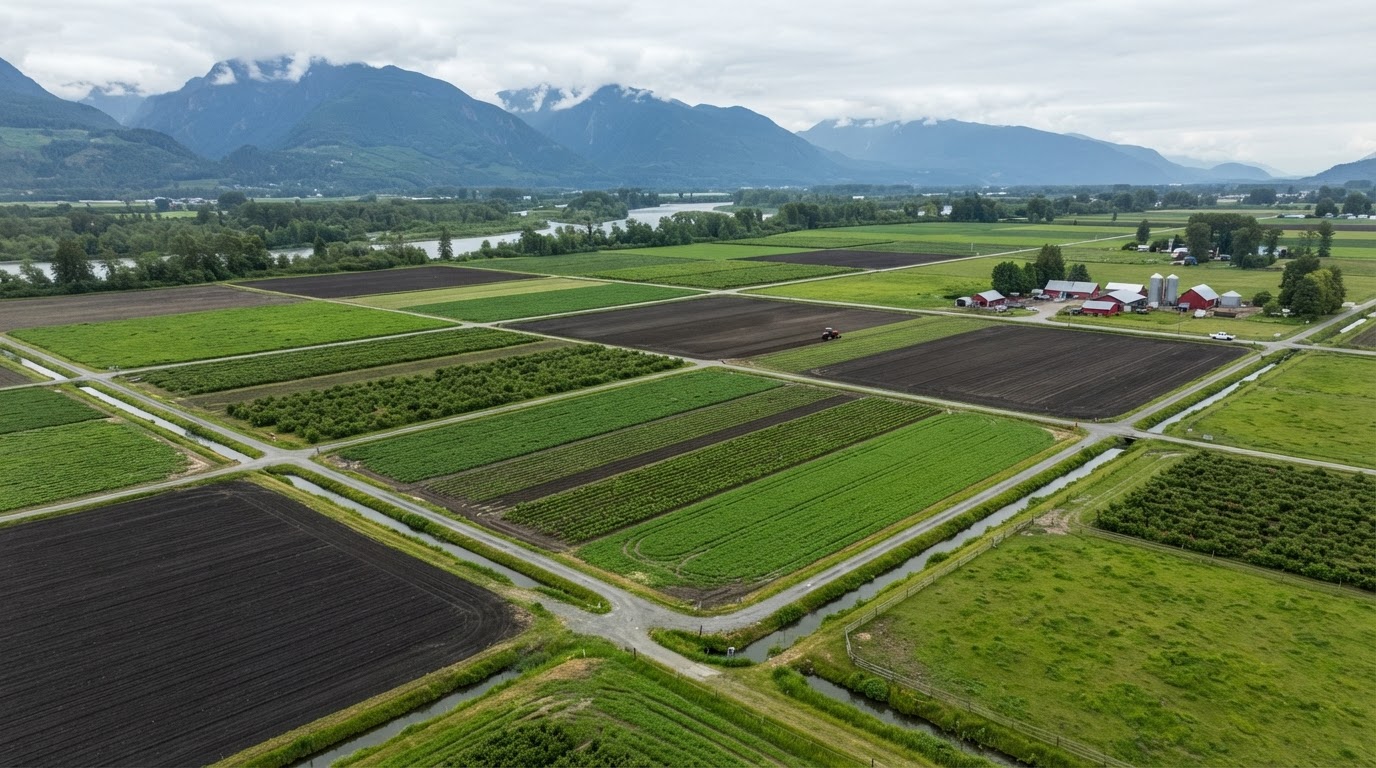
If you are buying or selling BC farmland, one of the first numbers you will see is the assessed value on the BC Assessment notice. It looks authoritative — it is a government number, it drives the property tax bill, and it is attached to every parcel. But an assessed value is not a market value, and on agricultural land the two can be far apart. Treating the assessment as the price is one of the most common and most expensive mistakes a BC farm buyer or seller can make.
This article explains how BC Assessment actually values farmland, where the tax roll systematically diverges from what a farm will sell for, and how to read an assessment notice in the context of a real transaction. It builds on our farm valuation guide and the ALR guide — read those for the broader framework.
The short answer
BC Assessment produces a mass-appraisal estimate for taxation, not an appraisal for sale. On ALR farmland the assessment can understate market value (when the land's development pressure, water, or soil quality is not fully captured) or overstate it (when a Class 9 farm valuation or exemption masks what a buyer will actually pay). Use the assessment as one data point, not the price. A real farmland valuation weighs the soil, water, improvements, farm income and comparable sales — none of which the tax roll is designed to capture precisely.
What BC Assessment actually does
BC Assessment is a provincial Crown corporation that estimates the value of every property in British Columbia as of July 1 each year, for the purpose of property taxation. It uses mass appraisal — a statistical method that values large numbers of properties using market data and broad adjustments, rather than an individual inspection of every parcel. The result is an assessed value that is defensible across an entire jurisdiction and efficient to produce, but by design it is a general estimate, not a property-specific appraisal.
Two features of that process matter for farmland. First, the valuation date is July 1 of the previous year, so the assessment always lags the market — sometimes by a lot in a moving market. Second, mass appraisal smooths differences between parcels. The things that make one 20-acre ALR parcel worth meaningfully more than the next 20-acre parcel next door — a specific water licence, a particular soil capability class, a permitted farm-use improvement, a view — are exactly the details mass appraisal is built to average out.
Where the tax roll understates farmland value
On ALR farmland, the assessment can sit below market value for several reasons that are structural, not accidental. The land-use restrictions that protect ALR land (see our ALR guide) suppress the development value the assessment model would otherwise capture, so a parcel with genuine development pressure on its boundary may be assessed as pure farmland while the market prices in the pressure. Water is the other big one: a parcel with a strong, transferable irrigation licence can be worth substantially more than an identical-looking parcel with no water, and the assessment rarely reflects that licence's full contribution to value (see our water rights guide).
Soil capability is a third. Two parcels of the same size in the same area can sit on very different Canada Land Inventory classes — one prime Class 1–2 soil, one marginal Class 5–6 — and the difference in productive value is real. Mass appraisal, working from area averages, will not reliably separate them. The same is true for improvements that matter to a farm operation but not to a residential model: a functional barn, a milking parlour, a greenhouse base, fencing and drainage all add value to a buyer who will actually farm, and the assessment may not weight them the way the market does.
Low assessment does not mean a bargain
A farm listed near its assessed value is not automatically well-priced. If the assessment understates the water, the soil, or the farm improvements, the market price can be well above the tax roll — and paying 'close to assessment' can still mean overpaying. Read the assessment as a floor signal, not a price ceiling.
Where the tax roll overstates farmland value
The assessment can also sit above market value, and on farmland this happens most often around the farm-class tax program. BC's Class 9 farm classification (see our farm classification guide) reduces the property tax on land that is genuinely farmed, and the assessment framework reflects that preferential treatment. A parcel assessed as farm-class land carries a tax valuation that assumes continued farm use — but a buyer who cannot or will not farm may face a very different cost structure once the class is lost, and the market price has to account for that risk.
The assessment can also overstate value where it carries residential or development assumptions that the ALR will not actually permit. A parcel near a growing town may be assessed with some uplift for its location, but if the land is in the ALR and cannot be subdivided or developed, that uplift is not realizable — and a buyer who pays for it is paying for an option they cannot exercise. Finally, a high assessment on a property with deferred maintenance, a failed septic, a compromised water source, or environmental contamination can look like 'value' that a real inspection will erase. The tax roll does not see inside the buildings or the water system.
How to read an assessment notice for a farmland purchase
An assessment notice separates the land value from the improvement (building) value, and on farm-class property it may also show the farm-class value distinct from the residential or market value. That breakdown is the useful part. The land-versus-improvement split tells you how much of the assessed value is in the dirt versus the structures — and on a farm, the dirt is usually the asset that holds or grows in value, while the structures depreciate. A parcel whose assessed value is mostly in aging improvements is a different proposition from one whose value is mostly in the land.
The more useful comparison is not assessment-to-list-price but assessment-to-comparable-sales. Look at what similar ALR parcels in the same area have actually sold for recently, and compare the ratio of sale price to assessed value across those sales. That ratio — not the assessed value itself — tells you whether the local market is trading above, at, or below assessment, and by how much. A farm priced at 1.4x assessment in an area where comparable sales trade at 1.1x assessment is a red flag regardless of the absolute number.
Assessment, market value, and the deal
In a real transaction, the assessment plays a supporting role, not a leading one. A lender may reference it, a buyer may anchor to it, and a seller may try to justify a price with it — but none of those make it the market value. The market value of a BC farm is the price a willing, informed buyer and seller agree on after weighing the soil, the water, the improvements, the farm income (or potential income), the ALR status, and the comparable sales. The assessment is one input into that conversation, not the answer.
- 1Pull the assessment notice and read the land-vs-improvement split, not just the total — on a farm, the land share matters most.
- 2Check the farm-class status and understand what happens to the tax bill if the class is lost after purchase (see our farm classification guide).
- 3Compare the ratio of recent comparable sale prices to their assessed values — that ratio, not the assessment itself, tells you where the market is trading.
- 4Weigh the factors the assessment cannot see: the water licence, the soil capability class, the condition of farm improvements, and any ALR development limits (see our water rights and ALR guides).
- 5If the gap between assessment and list price is large, ask why — and verify the reason with a real farmland valuation, not the tax roll (see our farm valuation guide).
- 6Remember the July 1 valuation date: in a moving market the assessment is already months stale by the time you see it.
The bottom line for buyers and sellers
BC Assessment is a tax tool, not a price tag. It is built for efficiency and fairness across an entire jurisdiction, not for precision on a single farm — and on ALR farmland, where value lives in the soil, the water, the farm income and the land-use rules, the tax roll will routinely miss the mark in both directions. A low assessment can hide a premium water licence and prime soil; a high assessment can hide a development assumption the ALR will not permit. Read the assessment as one signal among many, anchor your price to comparable sales and a real farmland valuation, and never let a government tax number do the work of a market analysis.
If you are buying or selling BC farmland and want help separating the assessed value from the real market value — the soil, the water, the farm income and the ALR status that actually drive what a farm is worth — contact Gurjit for a valuation grounded in the land's agricultural fundamentals.
Important: This information is educational only and is not legal, tax, financial or regulatory advice. ALR rules, water licensing, zoning and farm-classification requirements can change and depend on your specific property and circumstances. Always verify with the relevant BC authorities and qualified professionals before making decisions.
Frequently Asked Questions
- Is the BC Assessment value the same as the market value of a farm?
- No. BC Assessment produces a mass-appraisal estimate as of July 1 each year for property taxation, not an appraisal for sale. On farmland — and especially ALR farmland — the assessed value can sit above or below the real market value because the assessment does not precisely capture the soil capability, water licences, farm improvements, or ALR development limits that drive what a farm will actually sell for. Use the assessment as one data point alongside comparable sales and a proper farmland valuation.
- Why is my BC farmland assessed lower than its list price?
- There are several common reasons. ALR land-use restrictions suppress the development value the assessment model would otherwise capture, so a parcel with development pressure on its boundary may be assessed as pure farmland. Water licences, prime soil capability, and farm-specific improvements (barns, irrigation, drainage) are often not fully reflected in a mass appraisal. And the July 1 valuation date means the assessment lags the market. A low assessment does not by itself mean the list price is too high — compare the ratio of recent comparable sale prices to their assessed values instead.
- Can a high BC Assessment value mean I am overpaying for farmland?
- It can be a warning sign, yes. A high assessment can carry residential or development assumptions that the ALR will not actually permit, meaning a buyer would be paying for an option they cannot exercise. It can also reflect farm-class tax treatment that changes if the property stops being farmed, or it can value improvements that a real inspection reveals are in poor condition. If the gap between assessment and list price is large, verify the reason with comparable sales and a real farmland valuation rather than the tax roll.
- Does Class 9 farm classification affect the assessed value of BC farmland?
- Class 9 farm classification primarily affects the property tax bill, not necessarily the assessed market value, by applying a preferential tax rate to land that is genuinely farmed. The assessment notice may show a farm-class value distinct from the residential or market value. For a buyer, the key question is what happens to the tax bill if the farm class is lost after purchase — if you cannot or will not farm, the cost structure can change materially. See our farm classification guide for how Class 9 works.
- Should I use the BC Assessment value to price my farm for sale?
- Not on its own. The assessment is a lagging, mass-appraisal estimate built for taxation, and on farmland it routinely misses the soil, water, and improvement details that drive real value. Pricing from the assessment risks underpricing a property with a strong water licence and prime soil, or overpricing one whose assessed value rests on development assumptions the ALR will not permit. Anchor your price to recent comparable sales and a proper farmland valuation, and treat the assessment as one supporting reference point.
Gurjit Ghai, REALTOR®
Personal Real Estate Corporation
Brokerage: Rexara Realty Inc.
Gurjit Ghai is a BC real estate professional specializing in agricultural land, ALR properties, and farm operations across British Columbia. He helps buyers and sellers navigate water rights, soil capability, farm classification, and the unique due diligence that farmland transactions require.