
Ranches & Cattle Properties for Sale in Creston
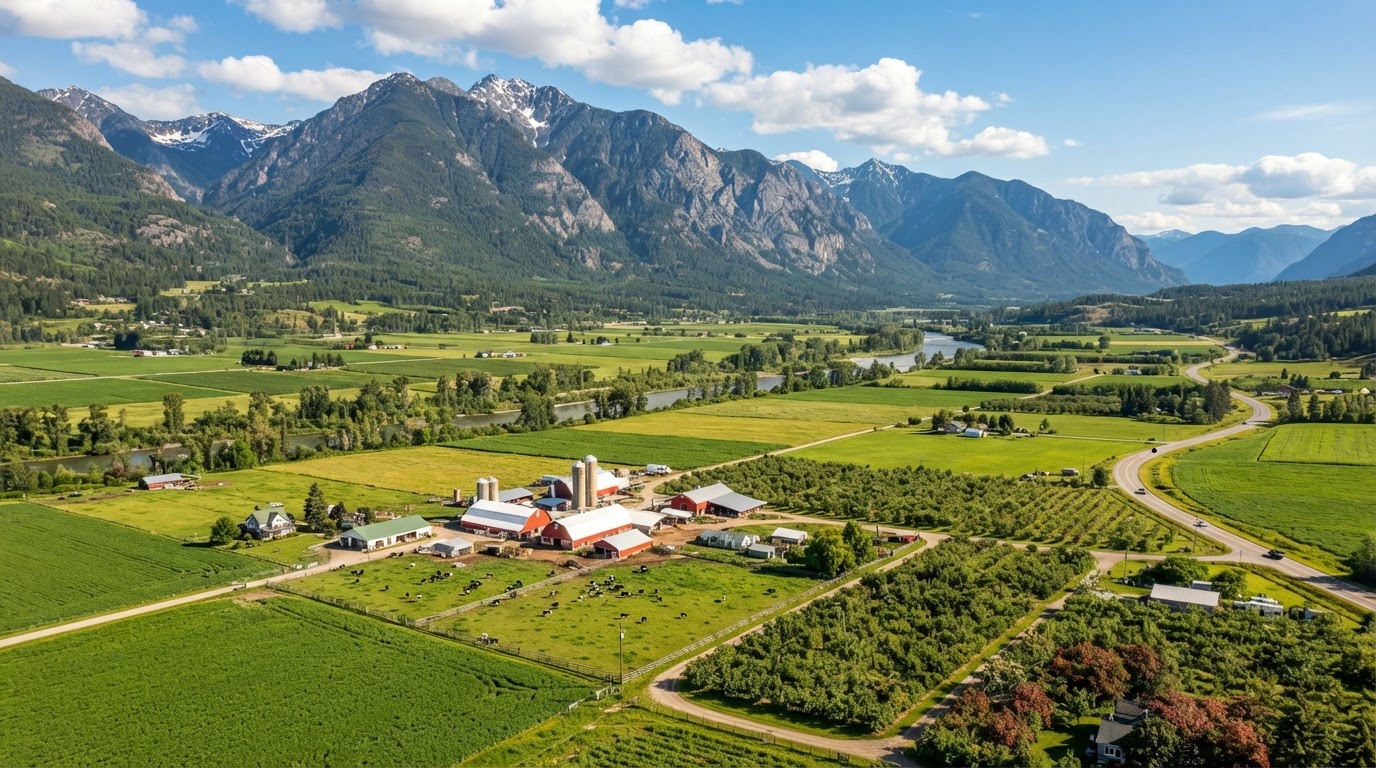
Creston sits in the fertile Creston Valley between the Purcell and Selkirk mountains, with cattle and forage operations on productive valley land. Buying a Creston ranch means verifying stock water and irrigation, confirming grazing tenure transferability, and understanding that the valley's sheltered, well-watered setting supports strong forage production — a different proposition from the dry-belt Interior.
Why Creston
Ranches & Cattle in Creston
Creston's fertile valley land, sheltered microclimate and reliable water make it a productive cattle and forage community in the Kootenay region, with strong forage production distinct from the dry-belt Interior.
What to Know Before Buying
Creston ranches operate in the fertile Creston Valley between the Purcell and Selkirk mountains, where a sheltered microclimate and reliable water support productive forage and cattle operations. Unlike the dry-belt country of the Thompson and Fraser Canyon, Creston's reliable rainfall and valley water mean irrigation water is generally more secure — but stock-water access on the range still matters. Productivity is still measured by carrying capacity, not by total acreage on paper.
Crown grazing tenure is central to many Creston ranches, and the valley's forested ranges carry different forage types and elevation bands than the open grasslands of the dry Interior. Grazing agreements are administered separately from the deeded land and are not automatically guaranteed to transfer. A buyer should confirm the status, terms and transferability of any grazing tenure with the provincial range program before relying on it as part of the purchase.
Ranch value lies in the forage base and water infrastructure, not in raw acreage. Buyers should assess productive versus total acreage, irrigated hay land, soil capability, fencing, corrals, barns and year-round road access. The Kootenay setting means reliable winter feed, shelter and access are essential, and the mountain terrain brings its own access considerations. ALR status matters — ranch parcels are often large and further subdivision is tightly restricted.
Kootenay Boundary Farmland Market Context
Sourced regional market data for Creston and the broader Kootenay Boundary region. Actual parcel values depend on soil class, water rights, improvements and current market — this is a typical range, not an appraisal.
$12,000 – $45,000 / acre
Creston Valley microclimate produces high-value late-season sweet cherries and productive forage.
Tree Fruit (Creston Valley Cherries/Apples), Dairy, Hay, Forage, Mixed Livestock
Kootenay River, Creston dyking district, mountain stream licences under WSA
CLI Class 2 – 4 (Creston lakebed silts to valley floor gravels)
Source: StatsCan Census of Agriculture 2021 & Ministry of Agriculture (2021–2025). Regional per-acre range is a BuyBCFarms.ca market analysis informed by Statistics Canada and Farm Credit Canada data; sub-regional dollar bands are our editorial estimate, not a figure published by those sources.
Due Diligence Checklist
- Verify licensed water sources, wells and any range-water access — the valley provides reliable water but stock-water access still matters.
- Confirm the status, terms and transferability of any Crown grazing tenure with the provincial range program.
- Assess productive versus total acreage — the forage base and carrying capacity, not paper acreage.
- Evaluate irrigated hay land, soil capability and the condition of fencing, corrals and barns.
- Confirm year-round road access through Kootenay mountain terrain.
- Check ALR status and whether subdivision is permitted.
- Review any easements, rights of way or water-district obligations.
What Drives Value
Illustrative guidance only — actual value depends on the specific parcel, its condition, water, soil and current market. Not a formal valuation.
Frequently Asked Questions
How does a Creston ranch differ from one in the dry-belt Interior?
Creston is wetter and more sheltered than the dry-belt country around Kamloops, Ashcroft or Lillooet, with reliable valley water that supports strong forage production. The trade-off is Kootenay mountain terrain and access considerations. The due diligence is the same — verify water, grazing tenure, forage base and access — but Creston's sheltered, well-watered valley makes forage production more reliable.
Is water a concern on a Creston ranch?
Less than in the dry-belt Interior — Creston's reliable rainfall and valley water mean irrigation water is generally more secure. But stock-water access on the range still matters, so verify licensed water sources and wells before buying.
Does Crown grazing tenure transfer with a Creston ranch sale?
Not automatically. Grazing agreements are administered separately from the deeded land. Confirm the status, terms and transferability of any grazing tenure with the provincial range program before relying on it as part of the purchase.
What makes a Creston ranch productive?
Carrying capacity, not paper acreage. A productive Creston ranch has a strong forage and hay base, secure water, transferable grazing tenure, sound fencing and corrals, reliable winter feed and shelter, and year-round road access through Kootenay mountain terrain.
Related Resources
Looking for ranches & cattle in Creston?
From Creston ranches & cattle to other BC farm types, get expert guidance from a real estate professional who specializes in British Columbia agricultural land.