

Written by Gurjit Ghai, REALTOR®
Rexara Realty Inc.·Published: October 26, 2026·ALR & Zoning
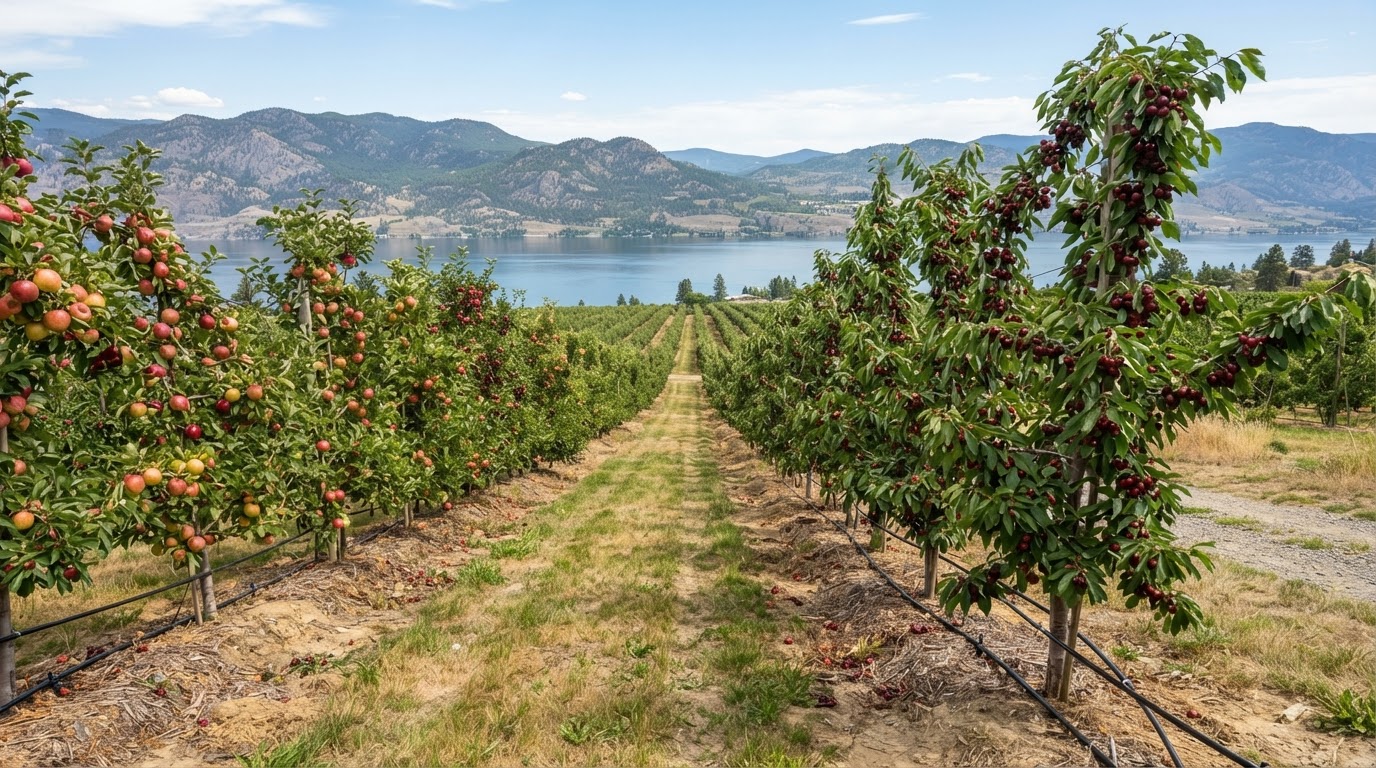
On October 24, 2026, British Columbia elected a new government. For most voters the headline was the result; for anyone buying, selling, or financing BC farmland, the more practical question is what the change means for the Agricultural Land Reserve (ALR), water rights, and the regulatory files that determine what a parcel can be used for. This guide reports what is verifiable right now — the election result, the open farmland files the new government inherits, and what farm groups asked the parties to commit to — and frames the buyer action as a due-diligence reminder, not a prediction.
This article is the policy companion to our broader ALR land-use guide, our ALR non-farm use applications guide, and our water rights guide. Where those guides explain the baseline rules, this one explains what is in motion at the government level and why a buyer should treat ALR status, water rights, and non-farm-use approvals as live due-diligence items rather than settled facts.
The short answer
A change in government does not change the ALR or the Water Sustainability Act on day one — those are statutes, not cabinet directives. What it can change is the regulatory direction: how strictly the ALC enforces non-farm use applications, whether the pending 50-50 processing-rule loosening proceeds, how foreign-ownership rules are administered, and how water-shortage and drought responses are prioritised. For a buyer, the right response is the same as before the election: verify the current ALR status, water-licence standing, and any non-farm-use approval on the specific parcel before you rely on it, because the policy environment around all three is in motion.
This is educational information, not political advice
This article reports the verified election result, the policy positions farm organisations asked the parties to adopt, and the regulatory files that were pending before the writ was dropped. It does not predict what the new government will do, endorse any party, or offer a political opinion. ALR and water rules change and depend on the specific parcel — confirm the current rules on the ALC portal and engage a qualified professional for a transaction-specific opinion.
What actually changed on October 24, 2026
Preliminary results from the October 24, 2026 election indicate the BC Conservatives won a majority of seats, defeating the incumbent NDP government. As of this article's date, Elections BC's final official results had not yet been declared — final counting was scheduled for early November 2026 — so the seat count should be treated as preliminary pending the official results. The premier-designate will form a new cabinet and set the regulatory direction for the province. The Agricultural Land Commission, the ministry responsible for the ALR, and the Water Sustainability Act all continue to exist as statutes — a change in government does not repeal them. What changes is the policy direction the new cabinet sets for how those statutes are administered.
For farmland, the practical difference is which files the new government picks up and which it lets lapse. Three files were open or pending when the writ dropped, and each one directly affects what a buyer can do with ALR land.
The three open farmland files the new government inherits
1. The ALR 50-50 processing-rule change (pending)
The outgoing NDP government had proposed loosening the '50-50 rule' — the requirement that a food-processing facility on ALR land process at least 50% local agricultural product. Under the proposal, on lower-grade (marginal, Class 5–7) ALR land, the local-product floor would drop to as low as 5%, and the total land eligible for this lower floor would be capped at 0.25% of private ALR land. Prime farmland (Class 1–4) would stay protected under the existing 50% floor. The public consultation on the proposal closed September 18, 2026; a regulatory decision had not been made before the election was called, so the proposal had not been enacted into law and the existing 50% rule remained in force.
For a buyer, this is a live file. If the new government proceeds with the loosening, a parcel of marginal ALR land that could not host a processing facility today may become eligible for one. If the new government lets it lapse, the existing 50% rule stays. Because the consultation has closed but no regulatory decision has been made, a buyer should verify the proposal's current regulatory status on the ALC or provincial government website before relying on it. Either way, the buyer's due-diligence question is the same: confirm the parcel's ALR class and the current processing-rule floor before assuming a processing facility is permitted, and treat any loosening as a possibility, not a settled fact. See our ALR non-farm use guide for the application framework.
Separately, on October 13, 2026, Premier David Eby reportedly committed to removing the existing 50/50 food-processing rules if re-elected, according to a statement published by the BC Agriculture Council (BCAC). This campaign commitment is distinct from the earlier consultation proposal for a 5% BC-product threshold — it is a reported political pledge, not a regulatory amendment, and by itself it does not change the rules currently in force. A buyer should treat both the consultation proposal and the campaign pledge as signals of possible future direction, and continue to confirm the rule actually in force on the ALC or provincial government website before relying on it.
2. Foreign and corporate farmland ownership (under review)
During the campaign, the BC Greens proposed restricting foreign and corporate ownership of BC farmland and creating a public land bank. The BC Agriculture Council asked all parties to address farm profitability and the concentration of farmland ownership. None of these proposals were enacted before the election, and the new government has not stated a position on them. What is verifiable is that foreign and corporate ownership of BC farmland is already subject to existing rules, and any change to those rules would be a new regulatory process — not an overnight shift.
For a buyer, the practical point is that ownership rules can change, and a buyer who is a non-resident, a corporation, or a foreign national should confirm the current rules on their specific transaction before closing. The rules in force today are the rules that apply; the rules under discussion are not. See our foreign buyer restrictions guide for the current framework.
3. Water, drought, and the BCAC affordability ask
The BC Agriculture Council asked all parties to commit to farm profitability, food affordability, and self-reliance — a set of asks that touch water allocation, drought response, and the cost of production. The outgoing government had been working on a drought and water-shortage strategy; that file transfers to the new government. The Water Sustainability Act and the existing water-licence system continue to apply regardless of the change.
For a buyer, the water layer is the one that most directly affects farmland value, and it does not change with the election. A parcel with a secure, adequately sized irrigation licence is a different asset than the same acreage without one — and that difference is the same on October 25 as it was on October 23. Verify the water-licence standing on any irrigated parcel before closing, and treat the drought strategy as background context, not a parcel-specific rule. See our water licence transfer guide for the transfer framework.
What farm organisations asked the parties to commit to
During the campaign, the BC Agriculture Council — the umbrella organisation for BC farm groups — asked all parties to commit to a set of priorities. These asks are a useful map of what the farm sector is watching, regardless of which party forms government:
- Protect the best farmland from development and fragmentation — the ALR is the core tool, and farm groups want it strengthened, not loosened.
- Cut red tape on soil-permit and farm-building approvals — a recurring complaint about the time and cost of getting permits for normal farm operations.
- Balance permitting and environmental protection — farm groups want the province to avoid layering federal, provincial, and local requirements in ways that make ordinary farming impossible.
- Address farm profitability and food affordability — the BCAC framed this as a self-reliance issue, not just a subsidy ask.
- Clarify water allocation and drought response — especially for irrigation-dependent regions like the Okanagan and the dry Interior.
None of these asks is a statute; they are the policy direction the farm sector is asking the new government to adopt. A buyer should read them as a map of where regulatory pressure may increase (ALR enforcement, water allocation) or decrease (permit red tape), and adjust due diligence accordingly.
What this means for a farmland buyer right now
The election changes the political context, but it does not change the legal status of any parcel today. The ALR, the Water Sustainability Act, the local zoning bylaw, and any existing non-farm-use approval on a parcel all continue to apply exactly as they did before October 24. What the election changes is the direction of travel — which files proceed, which lapse, and how strictly the regulators enforce the rules that already exist.
The buyer's due-diligence response is to treat every ALR, water, and non-farm-use question as a live item, not a settled one. Specifically:
- 1Confirm the parcel's ALR status and class on the ALC portal — and check whether the pending 50-50 processing-rule change would affect the parcel if it proceeds.
- 2Confirm the water-licence standing, authorised purpose, and quantity on any irrigated parcel — the water layer does not change with the election.
- 3Confirm whether any non-farm use the buyer is counting on (a processing facility, a tasting room, a second residence) is already permitted, permitted with conditions, or would require a new ALC application — and treat the application as a process with an uncertain outcome, not a right.
- 4If the buyer is a non-resident, a corporation, or a foreign national, confirm the current ownership rules on the transaction — the rules in force today apply; proposed changes do not.
- 5Where any of the above is uncertain, make the seller's written confirmation of the current status a condition of the purchase, and engage a professional familiar with BC ALR and water law for a transaction-specific opinion.
The bottom line
A new government means a new regulatory direction, not a new legal regime. The ALR, the Water Sustainability Act, and the local zoning bylaw on a BC parcel are the same on October 25 as they were on October 23 — what changes is which files the new cabinet picks up, which it lets lapse, and how strictly it enforces the rules that already exist. For a farmland buyer, the right response is unchanged: verify the ALR status, the water-licence standing, and any non-farm-use approval on the specific parcel before you rely on it, because the policy environment around all three is in motion. A buyer who treats any of these as settled because 'the rules haven't changed yet' is doing the due diligence in the wrong order.
If you are buying BC farmland and want help understanding how the government change affects the ALR, water, or non-farm-use layer on a specific parcel, contact Gurjit for a due-diligence conversation that starts with the current rules, not the political headlines.
Important: This information is educational only and is not legal, tax, financial or regulatory advice. ALR rules, water licensing, zoning and farm-classification requirements can change and depend on your specific property and circumstances. Always verify with the relevant BC authorities and qualified professionals before making decisions.
Frequently Asked Questions
- Does a change in BC government change the ALR rules on a farm?
- No — the Agricultural Land Reserve is a statutory land-use zone created by the Agricultural Land Commission Act (ALCA). A change in government does not repeal the statute or remove a parcel from the ALR. What can change is the regulatory direction: how strictly the Agricultural Land Commission enforces non-farm use applications, whether the pending 50-50 processing-rule loosening proceeds, and how the ALC interprets its mandate. The ALR status of a specific parcel is the same the day after the election as the day before — confirm it on the ALC portal and treat any policy change as a possibility, not a settled fact.
- What is the 50-50 ALR processing rule and did the election change it?
- The 50-50 rule requires a food-processing facility on ALR land to process at least 50% local agricultural product. The outgoing government proposed loosening it on marginal (Class 5–7) ALR land — dropping the local-product floor to as low as 5% and capping the eligible land at 0.25% of private ALR land. The proposal was still in the regulatory process when the election was called and had not been enacted. The new government has not stated whether it will proceed. A buyer should confirm the current rule on the ALC portal before assuming a processing facility is permitted on a specific parcel, and treat the loosening as a possibility, not a settled fact.
- Does the BC election affect water rights on farmland?
- No — water licences are issued under the Water Sustainability Act, which is a statute and does not change with a change in government. A water licence is appurtenant to land, but a transfer of appurtenancy or change of ownership is not automatic on sale — it may require notification or approval under the Act and the conditions set out on the licence. Before relying on a licence, a buyer should verify the licence's current status, authorised purpose, authorised quantity, and the applicable transfer or change-of-ownership requirements with the provincial water manager, and confirm the licence record in the BC Water Rights database. What can change with a new government is the policy direction on drought response, water allocation, and how water-shortage restrictions are administered — but the licence's standing on a specific parcel is the same the day after the election as the day before, subject to the transfer requirements above.
- Should I wait to buy BC farmland until the new government settles its policy?
- That depends on whether your purchase decision depends on a file that is in motion. If you are buying land for farm use under the existing rules, the election does not change the legal status of the parcel. If your decision depends on a non-farm use approval, a processing facility under the 50-50 rule, or a foreign-ownership question, the file is in motion and the outcome is not guaranteed — in that case, making the approval a condition of the purchase, or waiting until the file is resolved, may be the right call. Confirm the current rules on the specific parcel before closing, and engage a professional where the file is central to the decision.
- What did BC farm groups ask the parties to commit to during the election?
- The BC Agriculture Council asked all parties to protect the best farmland from development, cut red tape on soil and farm-building permits, balance permitting with environmental protection, address farm profitability and food affordability, and clarify water allocation and drought response. These are policy asks, not statutes — they map where the farm sector wants regulatory pressure to increase (ALR enforcement, water) or decrease (permit red tape). A buyer should read them as a signal of where the rules may tighten or loosen, and adjust due diligence accordingly.
- Is this article political advice?
- No. This article reports the verified election result, the policy positions farm organisations asked the parties to adopt, and the regulatory files that were pending before the writ was dropped. It does not predict what the new government will do, endorse any party, or offer a political opinion. ALR and water rules change and depend on the specific parcel — confirm the current rules on the ALC portal and engage a qualified professional for a transaction-specific opinion.
Gurjit Ghai, REALTOR®
Personal Real Estate Corporation
Brokerage: Rexara Realty Inc.
Gurjit Ghai is a BC real estate professional specializing in agricultural land, ALR properties, and farm operations across British Columbia. He helps buyers and sellers navigate water rights, soil capability, farm classification, and the unique due diligence that farmland transactions require.