
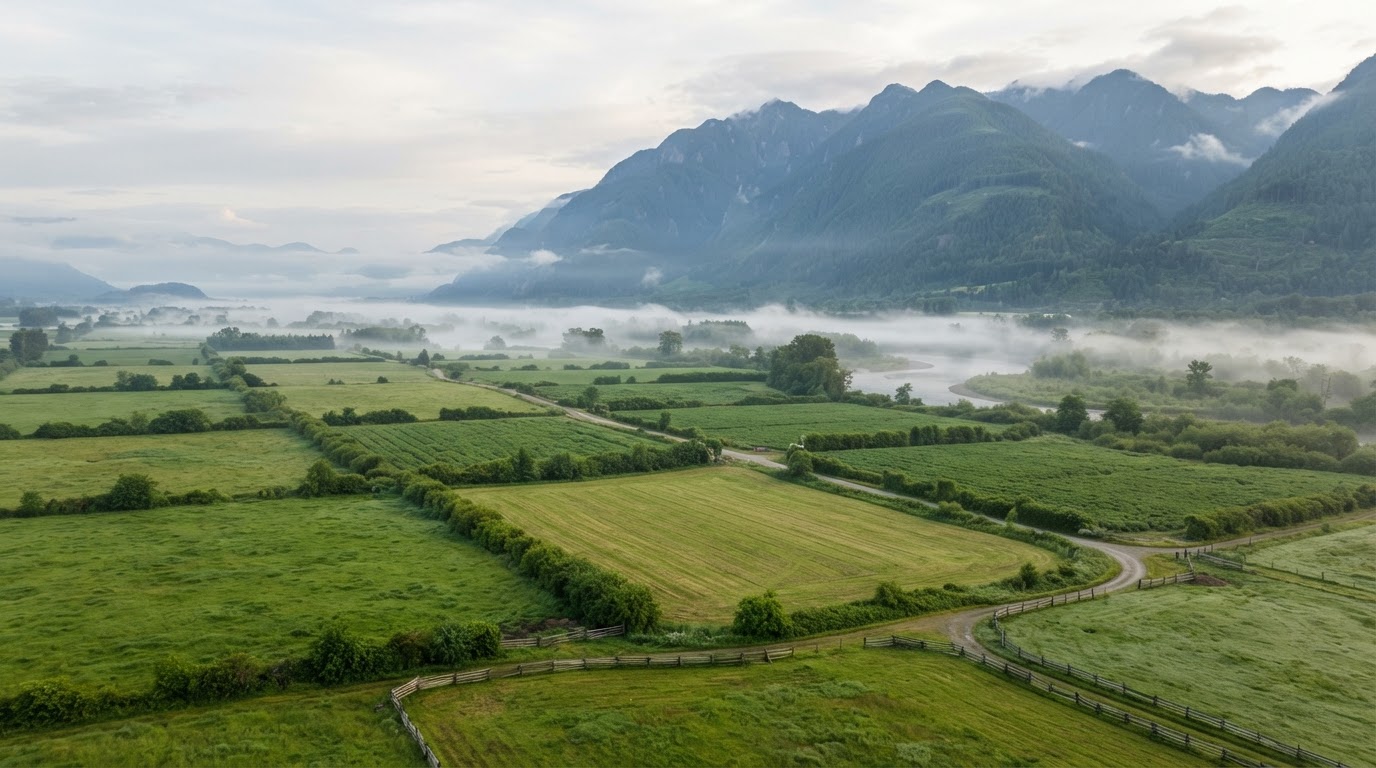
Equestrian Properties for Sale in Maple Ridge
Maple Ridge is a growing Metro Vancouver equestrian community, with purpose-built horse properties on the rural acreages north of the Fraser River. Buying a Maple Ridge equestrian property means assessing the specialised facilities — which are expensive to build and drive most of the value — plus usable turnout, fencing, footing, water and whether commercial boarding or training is permitted.
Why Maple Ridge
Equestrian Properties in Maple Ridge
Maple Ridge's rural-acreage zoning north of the Fraser, proximity to Metro Vancouver's equestrian community and trail access make it a growing horse-property market within easy reach of the city.
What to Know Before Buying
Maple Ridge's equestrian properties sit on the rural acreages north of the Fraser River, where purpose-built horse facilities — barns, indoor and outdoor arenas, paddocks and turnout — combine with trail access and proximity to Metro Vancouver's equestrian community. An equestrian property here is judged on its barn, arena, stalls, wash racks, tack areas, paddocks, fencing and turnout — these specialised improvements are expensive to construct and drive most of the property's value over bare acreage.
Usable turnout determines how many horses a Maple Ridge property can carry, not total parcel size. Buyers should assess pasture quality, drainage, paddock layout and the acres of safe, fenced turnout. Fencing type and condition, arena base and footing, and drainage all affect safety and value — a well-built arena with good footing and drainage is a capital asset; a poorly built one may need expensive reconstruction. The hillside setting means drainage and footing are especially important.
Many Maple Ridge equestrian parcels are in the Agricultural Land Reserve, and ALR rules apply regardless of parcel size. A personal-use horse property and a commercial boarding or training operation are treated differently, and both ALR rules and City of Maple Ridge zoning can restrict commercial activity. Confirm permitted uses for the specific parcel before relying on a commercial operation, and verify reliable horse water and any manure-management or setback requirements.
Fraser Valley Farmland Market Context
Sourced regional market data for Maple Ridge and the broader Fraser Valley region. Actual parcel values depend on soil class, water rights, improvements and current market — this is a typical range, not an appraisal.
$120,000 – $220,000+ / acre
Highest farmland values in Canada due to Class 1 prime alluvial soils, high gross farm receipts, and intense Metro Vancouver proximity.
Dairy, Berries (Blueberries/Cranberries), Poultry, Floriculture, Mushrooms
Sumas & Fraser River alluvial aquifers, municipal ditches, mountain creek licences under WSA
CLI Class 1 – 2 (Prime lowland alluvial silt/clay loam)
Source: BC Agricultural Land Commission & StatsCan Census of Agriculture 2021 (2021–2025). Regional per-acre range is a BuyBCFarms.ca market analysis informed by Statistics Canada and Farm Credit Canada data; sub-regional dollar bands are our editorial estimate, not a figure published by those sources.
Due Diligence Checklist
- Assess the barn, arena footing, stalls, wash racks and tack areas — equestrian improvements are specialised and expensive to build.
- Evaluate usable turnout — pasture quality, drainage, paddock layout and acres of safe, fenced turnout determine carrying capacity.
- Inspect fencing type and condition, arena base and footing, and drainage — especially important on hillside parcels.
- Verify reliable water for horses and any manure-management or setback requirements.
- Confirm ALR status and City of Maple Ridge zoning — especially whether commercial boarding or training is permitted.
- Check for any additional-residence restrictions if farm-help housing is needed.
- Review access, parking and any commercial-use permitting for a boarding or training operation.
What Drives Value
Illustrative guidance only — actual value depends on the specific parcel, its condition, water, soil and current market. Not a formal valuation.
Frequently Asked Questions
How does a Maple Ridge equestrian property compare to one in Langley?
Maple Ridge shares Langley's equestrian tradition but is closer to Metro Vancouver, with hillside acreages north of the Fraser. The due diligence is the same — assess barn, arena, turnout, fencing, footing, water and zoning — but Maple Ridge's hillside setting makes drainage and footing especially important, and its proximity to the city drives strong lifestyle demand.
Can I run a commercial boarding or training operation on a Maple Ridge equestrian property?
It depends on the parcel's ALR status and City of Maple Ridge zoning. A personal-use horse property and a commercial boarding or training operation are treated differently. Confirm permitted uses for the specific parcel before relying on a commercial operation.
What determines how many horses a Maple Ridge property can carry?
Usable turnout, not total parcel size. Assess pasture quality, drainage, paddock layout and the acres of safe, fenced turnout. A large parcel with poor drainage or unsafe fencing may carry fewer horses than a smaller, well-managed one.
What should I check on a Maple Ridge equestrian property's facilities?
Assess the barn, arena footing, stalls, wash racks and tack areas, plus fencing type and condition, arena base and footing, and drainage. On hillside parcels, drainage and footing are especially important — a poorly drained arena may need expensive reconstruction.
Related Resources
Looking for equestrian properties in Maple Ridge?
From Maple Ridge equestrian properties to other BC farm types, get expert guidance from a real estate professional who specializes in British Columbia agricultural land.