
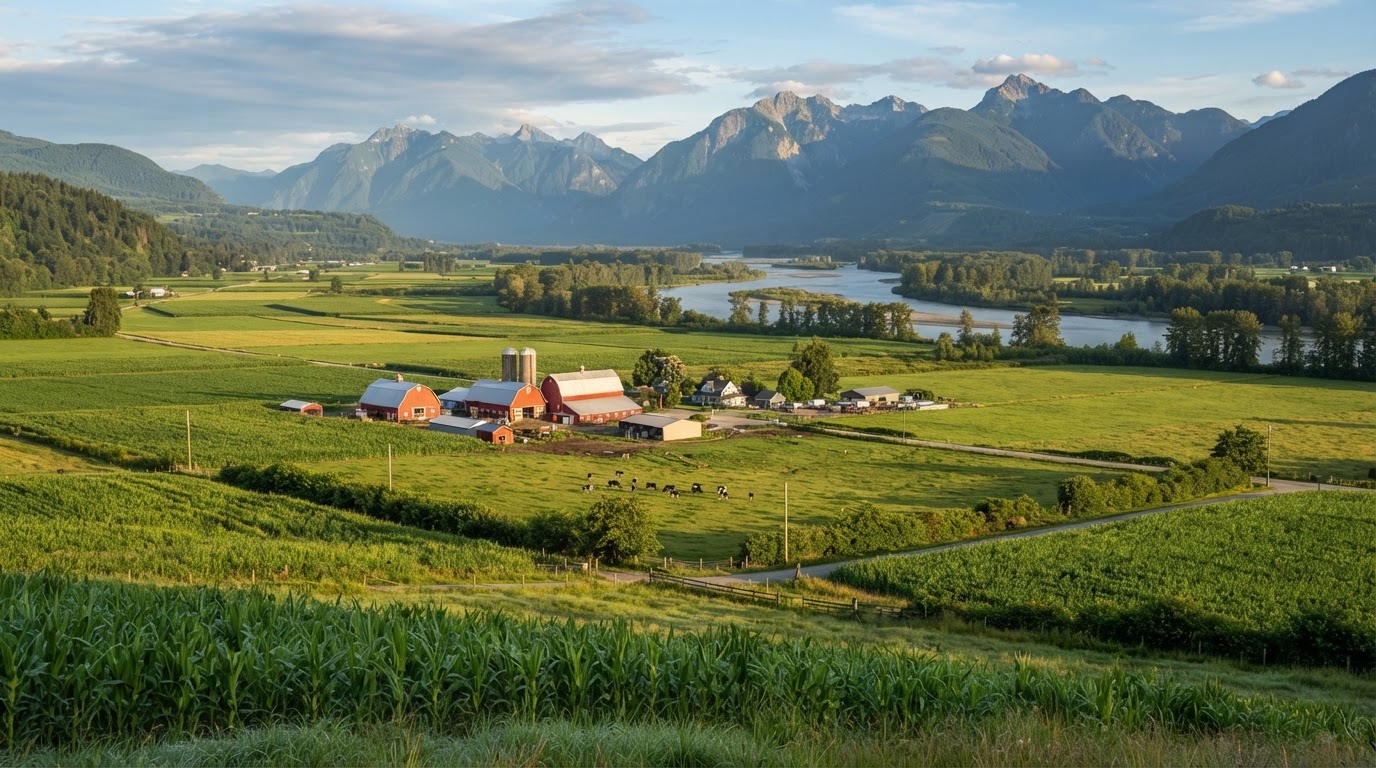
Greenhouses for Sale in Chilliwack
Chilliwack holds a growing cluster of greenhouse operations on rich eastern Fraser Valley soils, with protected agriculture representing substantial capital investment. Buying a Chilliwack greenhouse means assessing heating systems, water supply, the condition and compliance of greenhouse structures, and understanding how ALR status and municipal zoning govern what can be built and expanded.
Why Chilliwack
Greenhouses in Chilliwack
Chilliwack's rich eastern Fraser Valley soils, mild climate, reliable water and proximity to Metro Vancouver markets support a growing cluster of greenhouse operations, with slightly lower land costs than Abbotsford and Surrey.
What to Know Before Buying
Chilliwack's greenhouse operations sit on rich eastern Fraser Valley alluvial soils, where a mild climate, reliable water and proximity to Metro Vancouver markets make protected agriculture viable. Greenhouses represent significant capital investment — glass, heating, irrigation, climate-control and lighting systems — and the condition and compliance of that infrastructure is central to the property's value. Most of this farmland is held within the Agricultural Land Reserve.
Heating is the largest operating cost for most BC greenhouses. Buyers must assess the heating system — typically natural gas, with some biomass — its age, efficiency and compliance with current emissions standards. Chilliwack's eastern valley position gives it a mild climate comparable to Abbotsford, but the slightly more continental setting can mean marginally colder winter nights than Delta or Surrey. Water supply for irrigation and the drainage-ditch obligations that come with lowland acreage are also central.
ALR status and municipal zoning govern what can be built and expanded on a Chilliwack greenhouse property. Non-farm use, additional construction and expansion are tightly controlled by both the Agricultural Land Commission and the City of Chilliwack. Chilliwack's floodplain setting also brings dyke and drainage-district considerations that can affect building and expansion. Confirm what the specific parcel permits before relying on expansion plans, and review the property's current compliance status before buying.
Fraser Valley Farmland Market Context
Sourced regional market data for Chilliwack and the broader Fraser Valley region. Actual parcel values depend on soil class, water rights, improvements and current market — this is a typical range, not an appraisal.
$120,000 – $220,000+ / acre
Highest farmland values in Canada due to Class 1 prime alluvial soils, high gross farm receipts, and intense Metro Vancouver proximity.
Dairy, Berries (Blueberries/Cranberries), Poultry, Floriculture, Mushrooms
Sumas & Fraser River alluvial aquifers, municipal ditches, mountain creek licences under WSA
CLI Class 1 – 2 (Prime lowland alluvial silt/clay loam)
Source: BC Agricultural Land Commission & StatsCan Census of Agriculture 2021 (2021–2025). Regional per-acre range is a BuyBCFarms.ca market analysis informed by Statistics Canada and Farm Credit Canada data; sub-regional dollar bands are our editorial estimate, not a figure published by those sources.
Due Diligence Checklist
- Assess the heating system — type, age, efficiency and compliance with current emissions standards.
- Evaluate the greenhouse structures — glass, plastic, frame condition and any climate-control or lighting systems.
- Verify water supply for irrigation and any drainage-ditch or lowland obligations.
- Confirm ALR status and what the parcel permits for construction or expansion.
- Review municipal zoning — the City of Chilliwack's bylaws govern building and non-farm use.
- Assess floodplain, dyke and drainage-district considerations that can affect building.
- Check BC Assessment Class 9 farm classification status if relying on farm property tax.
What Drives Value
Illustrative guidance only — actual value depends on the specific parcel, its condition, water, soil and current market. Not a formal valuation.
Frequently Asked Questions
How does a Chilliwack greenhouse compare to one in Surrey or Delta?
All three are Fraser Valley greenhouse communities with similar mild climates and Metro Vancouver proximity. Chilliwack's eastern valley position can mean marginally colder winter nights than Delta or Surrey, but land costs are often slightly lower. The due diligence is the same — assess heating, structures, water and zoning — but review the floodplain and drainage-district context carefully.
What should I check when buying a Chilliwack greenhouse?
Assess the heating system (type, age, efficiency and emissions compliance), the greenhouse structures (glass, frame, climate-control), water supply and drainage, and what the ALR and municipal zoning permit for construction or expansion. Heating is the largest operating cost, so the condition and efficiency of the heating system is central to the property's value.
Can I expand a Chilliwack greenhouse operation?
It depends on the parcel's ALR status and the City of Chilliwack's zoning. Non-farm use, additional construction and expansion are tightly controlled by both the Agricultural Land Commission and the municipality. Chilliwack's floodplain setting also brings dyke and drainage-district considerations. Confirm what the specific parcel permits before relying on expansion plans.
Are there floodplain concerns for a Chilliwack greenhouse?
Chilliwack's lowland is in the Fraser River floodplain, so drainage infrastructure, dyke obligations and drainage-district considerations are relevant for greenhouse construction and expansion. Review these before buying — they can affect what can be built and the cost of compliance.
Related Resources
Looking for greenhouses in Chilliwack?
From Chilliwack greenhouses to other BC farm types, get expert guidance from a real estate professional who specializes in British Columbia agricultural land.