

Written by Gurjit Ghai, REALTOR®
Rexara Realty Inc.·Published: October 5, 2026·Buying Farmland
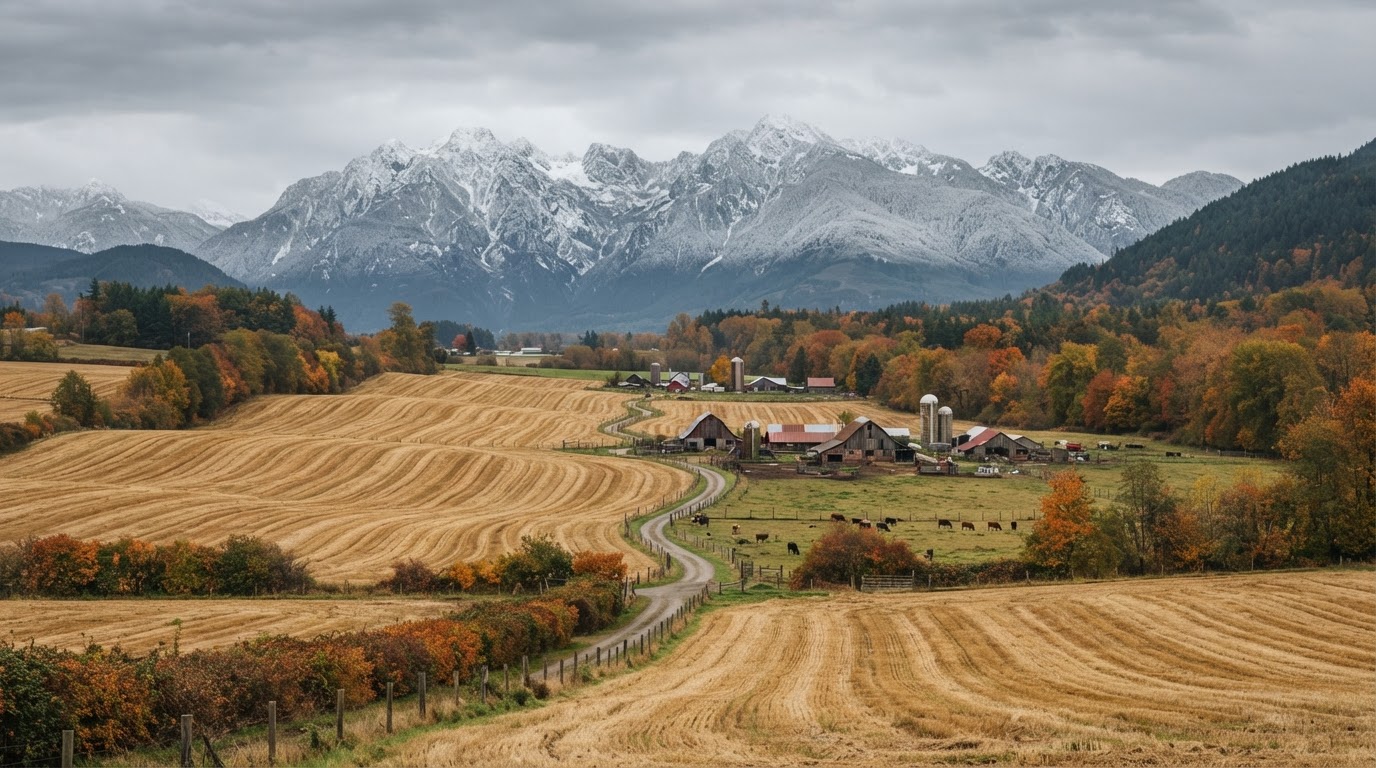
Fall is one of the most active seasons for serious BC farmland buyers, and for good reason. By October, the harvest is winding down across the Fraser Valley, the Okanagan and Vancouver Island, which means sellers know what the year produced and motivated owners often want a deal closed before winter sets in. Listings that have sat through the summer tend to see price movement, and buyers who do their due diligence carefully can close before the ground freezes and the calendar runs out.
But fall buying has a real constraint that summer buying does not: the window closes. As temperatures drop, some inspections get harder, access roads get wetter, and financing deadlines tighten against the year-end. A buyer who understands the seasonal rhythm — what can still be verified, what gets harder, and how to sequence the deal — is the buyer who closes cleanly instead of carrying conditions into January. See our Buying a Farm guide for the overall process; this article focuses on the fall-specific layer.
The fall window is real — and finite
Farmland transactions in BC routinely take several weeks from accepted offer to closing once conditions are layered in. A fall buyer who starts in October is racing the season, not just the seller. Begin the financing and title work early, because the constraints that close the window are environmental and calendar-based, not negotiable.
Why fall inventory moves
Several forces converge in the fall. Farmers who had a poor season may decide to sell rather than carry the operation through another winter. Estates and retirements that were timed to the harvest often list in early autumn. And institutional or absentee owners sometimes clear land before the year-end for accounting reasons. The result is a batch of listings that are genuinely motivated rather than testing the market — but the good ones move quickly, so a fall buyer should have their financing and advisory team lined up before browsing, not after.
Regionally, the fall market looks a little different everywhere. In the Fraser Valley, berry and vegetable ground often comes available once the crop is off. In the Okanagan, vineyard and orchard transactions tend to accelerate after harvest because a buyer can see what the season actually produced. In the Interior and Cariboo, ranch listings often carry into late fall before winter access becomes a serious obstacle.
What to inspect before the ground freezes
Freezing weather changes what a buyer can realistically verify, and some of the most important farmland inspections become harder — or impossible — once the ground is frozen. Prioritise the items below early in the condition period so a failed inspection can still be resolved (or the deal walked) before winter.
- Water systems — wells, pumps, irrigation lines and dugouts should be inspected and flow-tested while the ground is still workable. A frozen well or a winterised irrigation system tells you far less than one tested in operating conditions.
- Septic and drainage — perc testing and septic inspection are season-dependent; once frost sets in, results become unreliable or the test cannot be done at all. On lowland Fraser Valley farms, drainage and ditch conditions are a fall priority.
- Access roads — rural access can deteriorate fast with fall rain and early frost. Drive the access road in poor weather, not just on a dry day, to understand what winter delivery and emergency access really look like.
- Roofs and outbuildings — snow and ice loads expose weaknesses that a summer walkthrough hides. Inspect barn, shop and greenhouse roofs for sag, leaks and structural integrity before the weight of winter is on them.
- Soil and fields — walk the fields before freeze-up to read drainage patterns, standing water lines and compaction. Snow cover erases exactly the evidence a farmland buyer needs most.
Water is the first fall inspection
On irrigation-dependent land — especially in the Okanagan — water verification is the single most time-sensitive fall task. Well flow tests, pump condition and irrigation-system integrity all need the ground open and the system operational. Once the system is winterised or the ground freezes, you are buying the seller's word, not the evidence. See our Water Rights & Irrigation guide for what to verify.
What gets harder in winter due diligence
Some parts of a farmland purchase simply take longer or become more uncertain once winter arrives. Knowing this in advance lets a fall buyer front-load that work while it is still straightforward.
| Task | Fall vs. winter reality |
|---|---|
| Well flow testing | Testable while the system is operating; once winterised or frozen, you rely on historic records instead of live evidence. |
| Septic / perc testing | Season-dependent and unreliable or impossible after deep frost — schedule it in the fall window. |
| Field & drainage walk | Visible in the fall; snow cover and frost erase drainage patterns, compaction signs and standing-water evidence. |
| Survey & site visits | Easier in the fall; winter access to remote parcels can be blocked by snow, mud or closed logging roads. |
| ALR & zoning confirmation | Paperwork-based and unaffected by season — but verification responses from agencies can slow over the holidays, so request early. |
Financing and the year-end clock
Agricultural mortgages often take longer to underwrite than residential mortgages because the security includes land, improvements and sometimes operational assets, and the lender may order an agricultural appraisal. A fall buyer who wants to close before year-end should start the financing conversation before making an offer, not after, and should give the lender realistic time for an appraisal that may require a site visit before the snow.
Some buyers also time farmland purchases against their own tax or business year-end, which can create a cluster of motivated closings in November and December. If your purchase has a year-end rationale, make sure the lender, lawyer and inspector can all hit the same date — the bottleneck is rarely the seller; it is almost always the condition timeline running into the holidays.
Line up your team before you browse
The fall buyer's biggest advantage is preparation. Have a lender who understands agricultural property, a lawyer experienced with farm title and water rights, and a qualified inspector lined up before you make an offer. In a short season, the buyer who can move on conditions is the buyer who closes; the buyer who assembles the team after the offer is accepted often loses the window.
A fall farmland purchase checklist
- 1Line up an agricultural-experienced lender, lawyer and inspector before making an offer.
- 2Test wells, pumps and the irrigation system while they are still operational — before winterisation.
- 3Schedule septic and drainage inspections before frost makes them unreliable.
- 4Drive the access road in poor weather to understand real winter access.
- 5Inspect roofs and outbuildings for structural integrity before snow and ice loads arrive.
- 6Walk the fields to read drainage, compaction and standing-water patterns before freeze-up.
- 7Request ALR status, zoning confirmation and water-licence verification early — agency responses slow over the holidays.
- 8Give the lender realistic time for an appraisal that may need a pre-snow site visit.
- 9Set a closing date your whole team can actually hit, accounting for the holiday slowdown.
Fall is not a discount season by default — well-priced BC farmland still sells — but it is a season where motivated sellers, cleared harvests and a closing window line up in a way they do not at any other time of year. A buyer who understands that window, and who does the season-sensitive inspections while they are still possible, is the buyer who closes a clean purchase before winter rather than carrying conditions into the new year. Browse current BC farms for sale to see what is actively on the market this fall.
Important: This information is educational only and is not legal, tax, financial or regulatory advice. ALR rules, water licensing, zoning and farm-classification requirements can change and depend on your specific property and circumstances. Always verify with the relevant BC authorities and qualified professionals before making decisions.
Frequently Asked Questions
- Can you close a BC farm sale in winter?
- Yes, but it is harder. The transaction itself can close in winter, but several inspections become unreliable or impossible once the ground freezes — well flow testing, septic and perc testing, and field drainage walks are all season-sensitive. A buyer who starts in the fall can complete these before winter; a buyer who carries conditions into January often has to accept inspections based on historic records rather than live evidence.
- What freezes and what doesn't when buying farmland in winter?
- What freezes: well flow tests, septic and perc tests, drainage walks and access to remote parcels. What doesn't freeze: the paperwork — title, ALR status, zoning, water-licence verification and financing can all proceed in winter, though agency responses may slow over the holidays. The smart approach is to front-load the physical inspections in the fall while they are still possible.
- How does ALR review timing work for a fall purchase?
- ALR status confirmation is paperwork-based and unaffected by season, but requests to the Agricultural Land Commission and local governments can slow over the December–January holiday period. If your purchase depends on ALR confirmation, an exclusion opinion, or a non-farm-use question, request it early in the fall so the response arrives before the holidays. See our Understanding the ALR guide.
- Why do farmland sellers list in the fall?
- Fall listings are often genuinely motivated rather than testing the market. Farmers who had a poor season may sell rather than carry the operation through another winter; retirements and estates timed to the harvest often list in early autumn; and some absentee or institutional owners clear land before year-end for accounting reasons. The result is a batch of motivated inventory — but the good ones move quickly, so line up your financing and advisory team before browsing.
- Should I test the well before buying farmland in BC?
- Yes, and ideally before the system is winterised or the ground freezes. A well flow test, pump inspection and irrigation-system check all need the ground open and the system operational. Once the system is winterised or frozen, you rely on the seller's word and historic records instead of live evidence. On irrigation-dependent land — especially in the Okanagan — water verification is the single most time-sensitive fall inspection.
Gurjit Ghai, REALTOR®
Personal Real Estate Corporation
Brokerage: Rexara Realty Inc.
Gurjit Ghai is a BC real estate professional specializing in agricultural land, ALR properties, and farm operations across British Columbia. He helps buyers and sellers navigate water rights, soil capability, farm classification, and the unique due diligence that farmland transactions require.